Games like Hearts of Iron 4 that still care about supply
Playze Staff · Nov 28, 2026
Hearts of Iron IV asks you to "design division templates for your armies" and to "set out factory instructions", and those two phrases from its own store page explain why the game holds people for a thousand hours. The war is downstream. What you actually do, hour after hour, is tune a production queue and a unit spreadsheet and then watch a clock turn them into territory. Which is why games like Hearts of Iron 4 are hard to recommend as a block: the useful question is which of those layers you liked, because almost nothing else does all of them at once.

HOI4 promises that "alternate historical paths open up with almost every decision you make" — the layer the first two entries take furthest. (Official Steam screenshot)
| Game | Turns or real time | Low | Date | Store |
|---|---|---|---|---|
| Victoria 3 | Real time, pausable | $9.58 | 21 Oct 2026 | Gameseal |
| Europa Universalis IV | Real time, pausable | $3.86 | 2 Nov 2026 | Driffle |
| Unity of Command II | Turn-based | $2.46 | 27 Oct 2026 | Gameseal |
| Panzer Corps 2 | Turn-based | $4.66 | 27 Sep 2026 | Driffle |
| Steel Division 2 | Both | $9.99 | 1 Oct 2026 | Steam |
| Darkest Hour | Real time, pausable | $1.94 | 12 Oct 2026 | Fanatical |
| Terra Invicta | Real time, pausable | $13.56 | 6 Nov 2026 | Driffle |
Factory instructions, stretched across a different century
Paradox Development Studio made Hearts of Iron IV, and two others of its own that run the same clock over the same kind of map.
Victoria 3
Here the production queue is the whole game and the war is the afterthought. Victoria 3 starts in the nineteenth century and asks you to "build your ideal society", which in practice means watching construction capacity, trade routes and the standard of living of seven social classes who all want incompatible things. Wargamer calls it the best political grand strategy game, and that is the right framing: your parliament can block a law you have spent forty years working towards, and the resulting crisis is more interesting than most of HOI4's wars.
The difference is pace. Armies move on their own once pointed at a front, so anyone who came to HOI4 to draw arrows will be frustrated here. Anyone who came for the factory screen gets that screen promoted to the whole design. Our page for Victoria 3 tracks seventeen sellers.

Victoria 3's construction queue does what HOI4's factory assignment does, except nothing you build is a tank. (Official Steam screenshot)
Europa Universalis IV
Four centuries instead of nine years, and an interface that assumes you have already read a wiki. Europa Universalis IV is the one people mean when they say a Paradox game is impenetrable, and it is also the one with the deepest alternate-history systems: trade nodes, estates, a diplomatic web that remembers everything. A campaign here lasts months of real time rather than a weekend. Thirteen years of expansions are both the attraction and the warning.
Games like Hearts of Iron 4 that keep the supply hubs and drop the decades
The other way to read Hearts of Iron IV is that its best system is supply: the moment a push outruns its railheads and dies.
Unity of Command II
Supply lines are not a feature of this game, they are the game — its own page calls them Unity of Command's "signature feature", and the loop is cutting an enemy's line to strand his divisions rather than grinding them down. Headquarters sit on the map as real units; they bridge rivers, resupply, motorise a formation with HQ trucks, and spend an Emergency Supply action when a spearhead is about to starve. PCGamesN describes it as a gateway to digital war games, and the reason is that it is ruthlessly small: a mission is an evening, not a season, and the branching Dynamic Campaign means a bungled operation sends you somewhere else rather than to a reload.
Against that, there is no nation-building whatsoever. No politics, no research tree, no economy — you receive an army and a map and a deadline. For anyone who liked encirclements and tolerated the rest, the Unity of Command II listings are worth comparing, because only eight sellers carry it and they do not move together.

The red and green supply traces are the entire decision layer here — there is no factory screen underneath them. (Official Steam screenshot)
Panzer Corps 2
A hex wargame with a core of nineteen campaigns and a unit roster carried between them, so a tank crew that survives Poland is still with you in 1945. It is the structure Hearts of Iron IV deliberately refuses — fixed scenarios, scored objectives, a defined end — and twenty-one sellers list Panzer Corps 2, which is more than any other game here.
Division templates, running at speed five
Steel Division 2
This is the closest thing to watching your HOI4 divisions actually fight. Its page promises "1:1-scale turn-based army management and real-time tactical battles with thousands of men at your order", and the Army General campaign layer really is turn-based while the battles it spawns are not. You build a deck of units before a battle in a way that will feel familiar to anyone who has fiddled with support companies, then you lose the battle because you put your anti-tank guns in the wrong hedgerow.
It is the Eastern Front in 1944 and nothing else, so there is no counterfactual here. What it offers instead is consequence at a scale HOI4 abstracts away: the arrows are drawn by other people, and you watch them fail. Steel Division 2 is on twelve sellers, the official shops competitive rather than undercut.

Steel Division 2 keeps a turn-based operational layer above battles like this one, which is the structure Hearts of Iron IV compresses into a single combat width number. (Official Steam screenshot)
The 1936 start, relocated
Darkest Hour: A Hearts of Iron Game
Formally this is the nearest thing on the list: a stand-alone Hearts of Iron game, running the same pausable clock, with a scenario list that includes "1936 The Road to Another War" starting on the first of January, exactly where Hearts of Iron IV begins. It reaches further in both directions than its successor does — from the outbreak of the Great War to the onset of the Cold War, with ten grand campaigns from 1914 to the Bulge and a Russo-Japanese War battle scenario in 1904.
What you give up is fifteen years of interface work. Province counts are high, the map is dense, and nothing is explained with a tooltip; the appeal is that the simulation underneath is less forgiving and the alternate histories are less scripted. Nobody should make this their first grand strategy game. For someone who has already finished a HOI4 campaign and found the focus trees too much like rails, the Darkest Hour page is where the twelve listings sit, and 87% of Steam reviewers are positive on it.

Darkest Hour's map covers 1904 to 1945, which is a wider span than Hearts of Iron IV attempts. (Official Steam screenshot)
Terra Invicta
Built by the team behind XCOM's Long War mod, and it takes HOI4's political layer somewhere stranger: "an alien invasion has fractured humanity into seven ideological factions", and you run one of them by capturing control points inside real nations before expanding across the solar system. The national-influence game is recognisably the same shape as courting a faction in a focus tree, except your rivals are other players of the same game. Wargamer's line is that it is the grand strategy game for XCOM fans, which also tells you where the fleet battles come from. Our Terra Invicta page carries seventeen listings, and it reached 1.0 at the start of this year rather than sitting in early access.
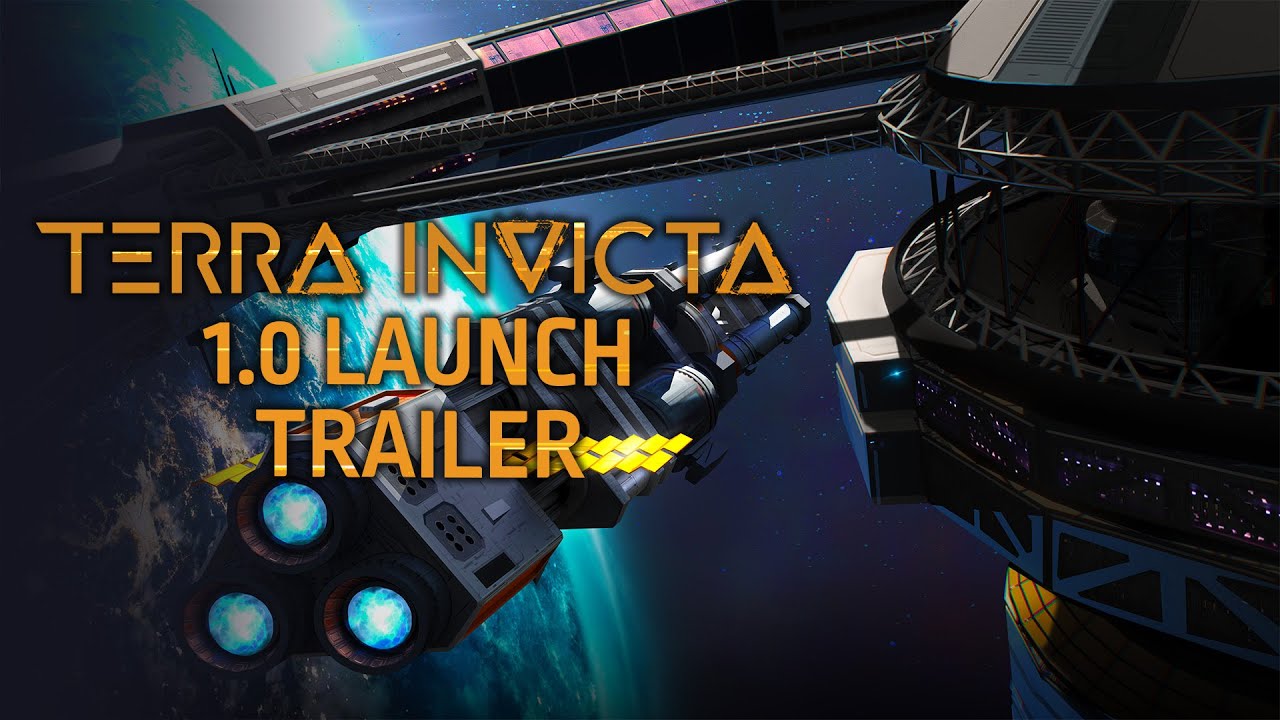
The 1.0 launch trailer, from publisher Hooded Horse's own channel.
Load Unity of Command II next
Darkest Hour is the closer relative and the better curiosity, but Unity of Command II is the better next game, and the reason is that it isolates the one HOI4 system that survives contact with a second playthrough. Supply, encirclement, a front that collapses because you took a hub you could not hold — that is the part people describe when they explain why they are still playing Hearts of Iron IV at hour six hundred. Unity of Command II gives you that in an evening with no production queue attached, which makes it the easiest of these to find out whether you were ever really playing a war game.
Two names on every other such list are absent above, both by the same studio and both covered next door: Crusader Kings III in our Bannerlord list, Stellaris in the Civilization 6 one. Readers drawn to Terra Invicta should go to the XCOM 2 list next, and the strategy discount round-up covers what else is cut. Seed listings live on the Hearts of Iron IV page.
We wrote this from store pages, published reviews and our own price record, not from playing each game for this piece. Some store links on our game pages are affiliate links, so playze may earn a commission at no extra cost to you.