Resonance: A Plague Tale Legacy on Game Pass: play or buy?
Davit Darchiashvili · Aug 31, 2026
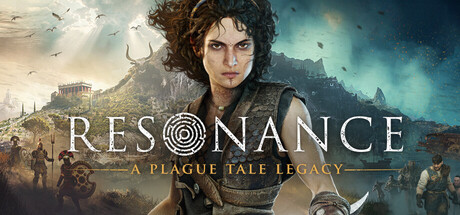
Resonance: A Plague Tale Legacy arrived on 27 August, and it arrived twice: as a full-price purchase, and as a day-one addition to the subscription. Both routes put the same game on your machine tonight. They are not the same decision, and the gap between them is wider than usual for this one.
Resonance: A Plague Tale Legacy on Game Pass sits on Ultimate and PC Game Pass only. Microsoft set that out in its wave announcement of 18 August, and the game went into the catalogue on release day rather than arriving months later the way most third-party titles do. If you are on a lower tier, it is not there, and no amount of searching will make it appear.
The launch trailer, from Focus Entertainment's own channel — Focus publishes the game, so this is the primary source rather than a mirror.
What Resonance: A Plague Tale Legacy on Game Pass actually includes
The subscription gives you the base game, complete, for as long as it stays in the catalogue and as long as you keep paying. That second clause is the one people forget. A Game Pass entry is a tenancy, not a deed. Third-party titles rotate out — usually after a year or two, sometimes sooner — and when one leaves, it leaves whether or not you are forty chapters into it.
What it does buy you is the right to find out whether you like it without committing. That matters more here than it would for a sequel that plays like its predecessors, because this one deliberately does not. If you have played Asobo's earlier two games and assumed you knew what you were getting, the subscription is the cheapest possible way to discover you were wrong.

The Minotaur's Island is the whole setting — a much tighter map than Requiem's tour of southern France. (Official Steam screenshot)
Sophia, the sphere, and the sword
This is a prequel, set fifteen years before A Plague Tale: Requiem. You play Sophia, described by Asobo as a young plunderer on the run and trying to work out where she came from. The search takes her to the Minotaur's Island, and the game runs two timelines across it: a medieval present and an ancient Minoan past, with the world shifting between them.
Three systems carry it. Combat is direct melee now — attacks, heavy strikes, blocking, parrying, dodging, guard breaks and a grapple hook — rather than the sling-and-hide loop the series was built on. Puzzles run on a stolen Minoan sphere that manipulates light, which is a neat inversion given that light was the survival tool in the first two games rather than the key. And exploration is built around evasion setpieces where something is hunting you and you are looking for a way out.
That is a real change of genre, not a reskin. The first two games were stealth games about being weak. This is an action-adventure about being capable. Whether that is what you wanted from a Plague Tale game is the actual question, and it is the one the subscription lets you answer for nothing.

Light is a puzzle tool here rather than a way to keep the rats off you. (Official Steam screenshot)
The reviews split, and the split is useful
Metacritic has it at 78 from 57 critic reviews: 44 positive, 13 mixed, none negative. The user score sits at 8.0. On Steam, as of today, it holds a Very Positive rating with 92% of roughly 1,500 reviews recommending it.
That is a spread with a clear shape. Nobody thinks the game is bad; a meaningful minority think it is unremarkable. Game Rant's 7/10 is representative of the middle: it praises the presentation, Anna Demetriou's performance as Sophia and the art direction, then criticises the combat for settling into one repeatable pattern of attack, parry, break posture, heavy attack. It also notes a skill tree that only ever unlocks six abilities, which is thin for a game leaning this hard on its fighting.
Read that against the price and you get the recommendation. A 78 that everyone agrees is handsome and nobody agrees is essential is exactly the shape of game a subscription exists for. It is the same logic we applied to the rest of the PC Game Pass catalogue: the service is at its best on the good-not-vital tier, where a purchase would have been a gamble.
The story trailer, also from Focus Entertainment, which sets up Sophia and the island without spoiling the timeline mechanic.
Do you need Innocence and Requiem first?
No. It is a prequel with a new protagonist, set a generation before Requiem, and it is built to be an entry point. You will miss some resonance — the pun is the game's, not ours — but nothing that stops the plot making sense.
You may well want them anyway, and this is where the buying advice gets more interesting than the subscription advice. A Plague Tale: Innocence came out in May 2019 and Requiem in October 2022. Both are old enough to have settled into deep discounts and both go on offer regularly. Check the live prices on their game pages rather than trusting any figure in an article; they move week to week, and the older one in particular drops a long way.
If you are working out when to pull the trigger, our guide to what a historical low actually tells you is the short version: the lowest recorded price is a benchmark, not a promise, and for a seven-year-old game you are rarely more than a few weeks from matching it.

Innocence, from 2019, is where the series started and where the stealth identity was set. (Official Steam screenshot)

Requiem, 2022. Resonance is set fifteen years before this, on a single island rather than across a country. (Official Steam screenshot)
Subscribe or buy: the honest maths
Subscribe if you intend to play it soon, once, and move on. That covers most people for a game of this shape. One month of Ultimate or PC Game Pass costs a fraction of the purchase price, and this is a game you are likely to finish rather than return to for years.
Buy if any of three things are true. You want it permanently — Game Pass will not keep it forever and you will not get a warning worth acting on. You are on console but not on Ultimate, in which case the subscription route is closed to you anyway. Or you are patient: a day-one purchase is the worst price this game will ever have, and Focus discounts its catalogue aggressively once the launch window closes.
What you should not do is buy it at full price today because you are worried about it leaving the catalogue. It only landed on 27 August. Nothing rotates out that quickly, and if you want the mechanics of timing a purchase properly, we have written the full price-tracking guide separately.

Asobo's art direction is the least contested thing about the game — critics who disliked the combat still praised the look. (Official Steam screenshot)
What it asks of your PC
Seventy-five gigabytes, and Steam lists an SSD as required rather than recommended, which is a hard floor rather than a suggestion. Sixteen gigabytes of RAM is the stated minimum. If you are running Game Pass on a laptop or a handheld, budget the storage before you budget the evening — a download that size on a modest connection is the bigger obstacle here than the frame rate.

Seventy-five gigabytes buys a lot of island. (Official Steam screenshot)
The bottom line
Play it on the subscription. This is close to the ideal Game Pass game: confidently made, well reviewed, visually excellent, and not quite essential enough to justify a full-price purchase from anyone who is not already devoted to the series. Start the month, finish the island, cancel if nothing else in the catalogue holds you.
Buy it only if you know you want to keep it, and even then, wait. If what you actually want is more of what Innocence and Requiem did, buy those instead — they are cheap now, they are the stealth games this one deliberately is not, and they will cost you less together than Resonance costs alone. Our single-player picks for 2026 cover where else that money could go.