Should you pre-order games? What the price data actually shows
Davit Darchiashvili · Sep 4, 2026
Two large games launched in the space of a week — The Blood of Dawnwalker on 3 September and Onimusha: Way of the Sword the day after — and both spent the previous three months with a pre-order button attached. So: should you pre-order games, or is the button just a way of paying early for something that gets cheaper while you wait? We tracked both of those launches, and seventeen more, through our own price data. The answer is not the flat "never pre-order" you usually get, but it is close, and the reason is more interesting than the slogan.
The pre-order price is not one price
Here is the thing almost nobody mentions. On Steam, PlayStation or Xbox, a pre-order sits at the recommended retail price and stays there until launch. Across the whole market — official stores plus the authorised key resellers we track — it does not. It slides, steadily, for the entire pre-order window.
We have continuous price data on all three of this season's big launches from 19 June onwards. Between that date and its launch day, the cheapest listed price for Onimusha: Way of the Sword fell by roughly a third. The Blood of Dawnwalker did almost exactly the same thing, dropping about 35% between mid-June and the night before release. Resonance: A Plague Tale Legacy, which launched a week earlier on 27 August, had shed about a fifth by its release day and about a third by today, 4 September 2026.
Three games, three publishers, one pattern: the person who pre-ordered in June paid meaningfully more than the person who pre-ordered the night before launch, for an identical key and the same midnight unlock.

The Blood of Dawnwalker's cheapest market price fell by about a third across its pre-order window, while its Steam price never moved. (Official Steam screenshot)
The floor is noisy, and that matters
One caveat, because it is the honest one. These floors are set by whichever reseller is cheapest on a given day, and that seller changes. Dawnwalker's lowest price actually ticked back up on launch day when a different store took over the bottom slot. So "it keeps falling" is a trend, not a guarantee you can time to the hour.
What that argues for is not clever timing but the opposite: set an alert at the price you are willing to pay and let it trip whenever it trips. Watching a countdown and buying on a feeling is how you end up paying June money in September.
What nineteen recent launches look like now
We pulled every game in our catalogue from a list of nineteen notable releases between February 2025 and this week, and checked where each one sits today, 4 September 2026.
Every single one is below its list price. Not most — all nineteen, including the two that launched within the last fortnight. Six of them are sitting at their all-time low as we write this. And for the seventeen that launched during 2025, the median discount against list is now around 70%.
That last number is worth sitting with. The median big release from eighteen months ago is available for well under a third of what a pre-order cost. Not a bargain-bin oddity — the median.

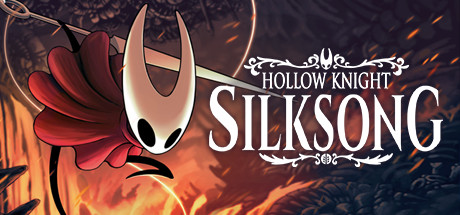
Hollow Knight: Silksong launched a year ago today and sits at its all-time low. Critical reception has almost no bearing on how fast a game falls. (Official Steam screenshot)
Quality does not protect a price; publisher policy does
A common defence of pre-ordering is that the good games hold their value. Our sample says otherwise. Hollow Knight: Silksong is one of the best-reviewed games in the set and one of the most heavily discounted. Battlefield 6 reviewed well and has fallen a long way from its official price.

Battlefield 6 shows the widest gap in our sample between what an official store asks and what the game can be bought for. (Official Steam screenshot)
Meanwhile Elden Ring Nightreign — a spin-off with a distinctly mixed reception — has held its price better than almost anything else in the sample. FromSoftware and Bandai Namco simply discount less aggressively. Arc Raiders, a live-service shooter, is in the same shallow bracket for the same structural reason: games with an ongoing player economy get discounted late and cautiously.
So the thing you are predicting when you pre-order is not "will this be good". It is "how does this publisher price things", which is both easier to answer and completely unrelated to whether you will enjoy the game.
The official store is never the cheapest one
Across all nineteen games, the best official-store price was at or above the best price we could find anywhere. Not once did an official store win outright. That gap is the real cost of the pre-order button on Steam or the PlayStation Store, and it exists on day one, not just months later.
This is not a free lunch. Key resellers carry genuine risk, and a brand-new AAA release is exactly where that risk is highest — activation problems and region-locked keys hurt most when you cannot simply wait. Read our guide to buying keys safely before you take that route, and our 105-game comparison of keyshops and official stores for how often the gap actually appears.
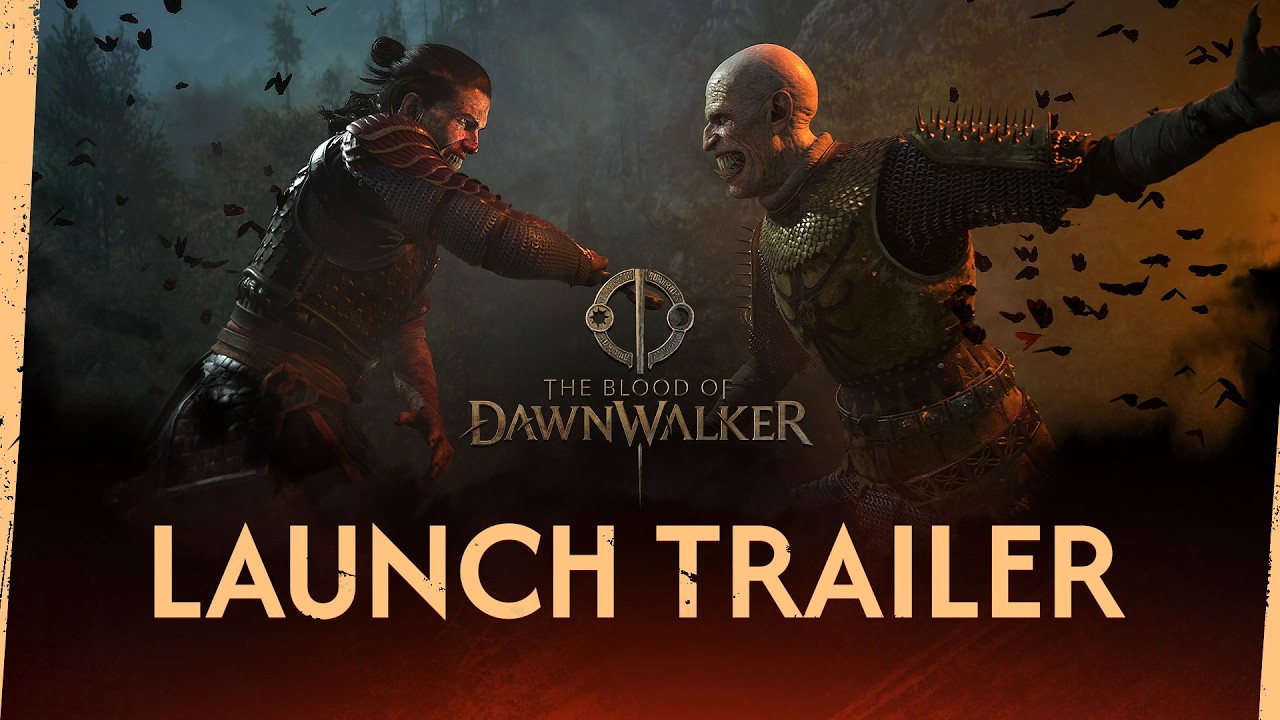
Bandai Namco Europe's launch trailer for The Blood of Dawnwalker — the marketing beat that pre-orders are timed to.
So should you pre-order games, ever?
Yes, in four situations, and they are narrower than the marketing suggests.
Competitive multiplayer where the population matters. If you are buying a shooter to play with a group in launch week, the first fortnight is the product. Waiting six months means learning the maps against people who already know them. This is the strongest case for buying at launch, and it is why Battlefield and Arc Raiders-style releases are the exception rather than the rule.
Physical and collector's editions with real production runs. A steelbook or a statue genuinely can sell out and genuinely does appreciate. A digital cosmetic pack does neither.
Games at risk of delisting. Licensed music, licensed likenesses, expiring sports rights. If a game is likely to vanish from storefronts, buying it while it exists is rational.
Small studios you want to fund. A pre-order for a two-person team is a vote, not a transaction. Be clear with yourself that this is what you are doing.
Everything else — the open-world single-player game, the RPG, the annual sequel — has no clock on it at all.
Capcom's own overview trailer from June 2026 — published at roughly the point in the pre-order window where the market price was at its highest.
What the bonuses are actually worth
Pre-order bonuses fall into three tiers, and only one is worth money.
Cosmetic packs are worth nothing; they are usually sold separately within a year. In-game currency and XP boosts are worth slightly less than nothing, because they signal a progression system built to be sold back to you. The only tier with a defensible price is early access — the deluxe editions that unlock three to five days before the standard one.
Be honest about what that costs. You are paying a premium over the standard edition to play a few days early, and you are paying it on launch week, which is the single worst week of a game's life to play it: the day-one patch has not landed, the driver update has not shipped, and the first round of performance fixes is still weeks out.

Resonance: A Plague Tale Legacy launched on 27 August and is already at its all-time low as of 4 September 2026. (Official Steam screenshot)
The fortnight rule
If you take one habit from this, take this one: wait fourteen days.
Two weeks gets you past the review embargo, past the day-one patch, past the first wave of performance complaints from people with your graphics card, and past the point where a broken launch is still being described as "server issues". It also usually gets you a lower price than the one on the pre-order page, because the market floor keeps sliding after release just as it did before it.
Two weeks costs you almost nothing. In a single-player game it costs you literally nothing except some spoiler avoidance. Set an alert, play something from your backlog, and buy on day fifteen with reviews in hand.
And if you do decide to buy at launch, at least check the all-time low on the game page first, so you know whether today's number is unusual or just Tuesday. The method is in what a historical low price actually is, and the wider habit in how to never overpay for a PC game.
Bottom line
Do not pre-order single-player games. The price falls throughout the pre-order window, keeps falling after launch, and every one of the nineteen recent releases we checked is cheaper today than it was on release day — regardless of how good it turned out to be. Pre-order only when the population, a physical print run, or a delisting risk gives launch day a value that waiting destroys. For everything else, the fortnight rule and a price alert will save you more over a year than any bonus cosmetic pack has ever been worth.