Fake discounts on game key sites: we checked 1,509 of them
Davit Darchiashvili · Oct 12, 2026
"85% off" is the most persuasive number in game retail. It is also the easiest to fake. All a seller has to do is invent a higher "regular" price to strike through. So we checked. We took every discounted offer from a key shop on the 1,000 most popular games we track, 1,509 offers in all, as of 12 October 2026. Then we measured each advertised discount against the price the official stores actually list the same edition at.
The result is less dramatic than the reputation of fake discounts, and more useful. Most advertised percentages are close to the truth. A minority are badly wrong, and they cluster in a few predictable places.
Fake discounts by the numbers
- The typical discount is real. The median advertised discount was 70%. Measured against the official list price, the median real saving was 69%. That is a 1-point gap.
- Half stretch it a little. 53% of discounted offers quote a "regular" price above the official list price. In most of those cases the stretch is small: a median of 3 points on the advertised percentage. That is the kind of gap currency conversion produces.
- One in twenty is plainly inflated. 5.2% of offers strike through a "regular" price more than one and a half times the official list. That is where an advertised 66% turns out to be 7%.
- A few cost more and still say "sale". 13 offers advertised a discount while costing more than buying from an official store.
- Some understate. 21% quote a "regular" price below the official list, so the real saving is bigger than the one advertised.

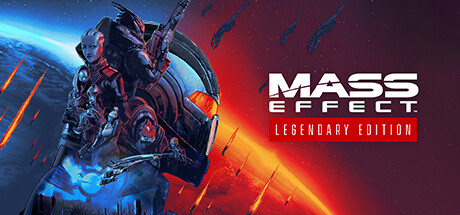
Mass Effect Legendary Edition had the widest gap we found: advertised at 66% off, really about 7% below the official list. (Official Steam screenshot)
The worst fake discounts we found
These are the widest gaps between the advertised percentage and the real saving against the official list price for the same edition:
| Game | Store | Advertised | Real saving vs official list |
|---|---|---|---|
| Mass Effect Legendary Edition | Keycense | 66% off | 7% |
| Papers, Please | Keycense | 55% off | 1% |
| Assetto Corsa | Keycense | 85% off | 35% |
| Yakuza: Like a Dragon | YUPLAY | 80% off | 34% |
| FINAL FANTASY VII REMAKE INTERGRADE | YUPLAY | 77% off | 48% |
| Sid Meier's Civilization VII | YUPLAY | 57% off | 31% |
| Cities: Skylines II | YUPLAY | 24% off | 0% |
Discounted key-shop offers whose struck-through regular price is far above the official list price, as tracked on 12 October 2026.
Two things can produce this. One is a regular price carried over from a different currency or an old list price and never updated. The other is a "regular" that is simply set high. Cities: Skylines II is the clearest case of what that does to a buyer: a 24% discount, on an offer that cost more than the official store. We are not claiming intent. The effect on the shopper is the same either way.

Papers, Please, advertised at 55% off, was within about 1% of its official list price. (Official Steam screenshot)
Where the inflated regular prices come from
Only some key shops send a "regular" price at all, and those are the only ones whose discount can be checked. Among them, the gap is large:
| Key shop | Discounted offers | Regular above official list | More than 1.5x the list |
|---|---|---|---|
| Keycense | 426 | 69% | 6% |
| YUPLAY | 401 | 67% | 5% |
| Loaded | 428 | 56% | 7% |
| PlayerLand | 115 | 4% | 1% |
| Playsum | 116 | 0% | 0% |
Key shops with at least 20 discounted offers in our sample of the 1,000 most popular games.
Note who is missing. Eneba, CDKeys, Driffle, Gamivo and Gameseal send us a single price with no "regular" price next to it, so our pages show them without a discount badge. That is not proof their own sites never inflate. It means the only number we can compare for them is the final price. That is the number that matters anyway.

Mass Effect Legendary Edition, the widest gap in our sample. Official trailer from the PlayStation channel.
The other kind of permanent sale
Official resellers have a quieter version of the same effect. A handful of them show a discount on nearly everything they sell, all the time:
| Official store | Games showing a discount | Cheaper than Steam today |
|---|---|---|
| PlanetPlay | 99.5% | 82% |
| GameBillet | 99.3% | 78% |
| GamersGate | 92% | 81% |
| Gamesplanet | 92% | 78% |
| Zapagames | 90% | 80% |
| Fanatical | 88% | 80% |
Standard editions also sold on Steam, among the 1,000 most popular games, 12 October 2026.
Here the base is honest. Their "regular" price is the same list price Steam uses, and they really are cheaper than Steam about four times in five. But a discount that is always on is just a price. It tells you nothing about whether today is a good day to buy. That is a question for the price history, not the badge.

Yakuza: Like a Dragon was advertised at 80% off at one store; the real saving against the official list was about a third. (Official Steam screenshot)
How to check a discount in ten seconds
- Ignore the percentage and compare the final price. Every game page here ranks stores by what you pay, not by how big the badge is.
- Look for the warning. When a key shop's "regular" price is more than one and a half times the official list, the offer is marked inflated and shown with the real saving instead.
- Check the historical low. If today's price is far above the lowest one recorded, the discount is not a deal, whatever it says. Our guide to what a historical low tells you explains how to read it.
- Know the store. A cheaper key from a marketplace carries different risks to an official store. Are key shops safe? covers what to check.

Assetto Corsa's 85% badge at one key shop was a real saving of about a third. (Official Steam screenshot)
The bottom line
Fake discounts exist, but they are not the norm. Most key-shop percentages land within a point or two of the real saving. About one offer in twenty is badly inflated, and those come mostly from the few shops that publish their own "regular" price. The defence is simple: compare final prices across stores, check the historical low, and treat a discount that never ends as a price rather than a sale. The first measurement of this was in our PC Game Price Index. This study is the key-shop close-up.