Is The Blood of Dawnwalker worth it? A launch-day verdict
Davit Darchiashvili · Sep 3, 2026
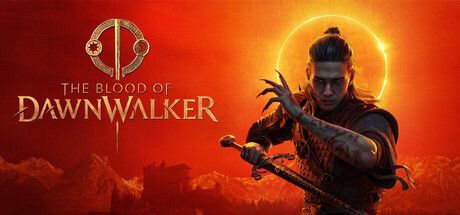
The Blood of Dawnwalker went live today, 3 September 2026, and it arrives with a design decision most big RPGs would never risk: a hard clock. Thirty days and thirty nights, and then the story ends whether you were ready or not.
So, is The Blood of Dawnwalker worth it? Yes — but the answer depends far less on whether Rebel Wolves can write than on whether you can tolerate an open world that charges you for looking around. That single mechanic is why the reviews landed as a spread rather than a consensus, and it is the only thing you actually need to decide before buying.

Vale Sangora is hand-built rather than generated, which is part of why the game can afford to charge you time for crossing it. (Official Steam screenshot)
What Rebel Wolves actually built
The setting is 14th-century Europe, mid-collapse. Steam's own description is blunt about it: bloody conflicts sweep the lands, the Black Death comes for the survivors, and vampires take that moment of weakness to walk out of the shadows. You play Coen, a young man turned into a Dawnwalker — human by day, vampire by night, permanently stuck between the two.
Bandai Namco publishes; Rebel Wolves develops, with Konrad Tomaszkiewicz as game director and co-founder. It runs on Unreal Engine 5, and the publisher describes it as the opening of a saga rather than a one-off.
That word "saga" usually means a cliffhanger, and here it does not. In Bandai Namco's own announcement, Tomaszkiewicz says each instalment will be "a standalone game with its own story, without narrative cliffhangers", and that this first one delivers "a definitive and self-contained conclusion". Future games will "span centuries, continents, and cultures across the globe" — a teaser even showed Coen in a modern, 21st-century setting. Practically, that means buying now does not sign you up for a trilogy before you get an ending.

The launch trailer, from the official Dawnwalker channel.
The thirty days and thirty nights, explained properly
The clock is not a stopwatch. Nothing drains while you stand still reading a codex, and that is the most common misunderstanding about this game.
Time moves in discrete chunks, spent on actions. Vice's review describes the structure as eight action points per cycle, with time advancing when you complete quests, level skills or interact with the world — enough for roughly six to eight quests in a day, and a cycle taking one to two hours of real play. Steam's description frames the same idea from the story side: "every time you take on a quest, time moves forward", pushing Coen's family closer to the end.
The villain, Brencis, is working to a schedule of his own. Thirty cycles is what you have before he acts, and the game is explicit that you will not have time for everyone. Helping one faction is a decision to abandon another, and the abandoning is the point.

By day Coen fights as a human, with a sword and witchcraft rather than claws. (Official Steam screenshot)
Where the clock stops working
This is the part worth being honest about, because it is where reviewers diverged.
GameRant's Josh Cotts found the rules opaque. He writes that "certain tasks that seemed like obvious quests that took away time didn't actually have any effect, while other seemingly mundane choices would make significant changes", and that "when nearly everything in the game seems determined to take that time away from you, and the rules for what does and doesn't advance the clock feel so inconsistent, that pressure starts feeling incredibly arbitrary".
There is a second, stranger failure mode: the clock is too generous. GameRant reports one reviewer reaching the point where they were strong enough to face Brencis with twelve days left, and another hitting the point-of-no-return warning with thirteen to spare. A time limit that you beat with two in-game weeks unspent is not really applying pressure; it is applying anxiety, which is a different and less pleasant thing.
Vice's reviewer had the opposite experience and rated the timer highly — meaningful weight on decisions, without stress. Both can be true. If you plan routes and commit, the clock reads as tension. If you sweep every map marker on reflex, it reads as a tax.
Two combat systems, not one
Day and night are not a lighting change. As a human, Coen fights with a sword and witchcraft through what Vice describes as an "Omniattack" system built on directional blocking and countering. As a vampire, he gets claws, teleportation, and neck-biting that restores health — a far more aggressive, mobile kit.
Each form has real weaknesses, and the game expects you to swap approach rather than pick a favourite. Dexerto's review praised the variety, calling the story riveting and the characters expertly written, while flagging two concrete problems: late-game side quests that turn formulaic, and a camera that clips into walls during fights in tight spaces.

Night flips the kit entirely: claws, teleportation and biting to heal. (Official Steam screenshot)
On performance, Vice noted a 40fps balanced mode where 60 had been promised, and hitches during fast traversal. Worth knowing before launch week rather than after.
Is The Blood of Dawnwalker worth it if you loved The Witcher 3?
Almost every reviewer reached for the same comparison, and Vice's verdict was "one of the best RPGs I've experienced since The Witcher 3". That is a real signal about quality of writing and quest construction. It is a misleading signal about shape.
The Witcher 3 is a game about abundance. You can spend eighty hours doing contracts, and the main quest waits patiently. Dawnwalker inverts that: the side content is the cost, not the reward. If what you loved about Geralt's world was the freedom to wander indefinitely, this is not the same pleasure, and our piece on whether The Witcher 3 still holds up in 2026 is a better guide to that itch.

The Witcher 3 rewards wandering. Dawnwalker charges for it — the same tone, an opposite structure. (Official Steam screenshot)
The closer structural relative is Kingdom Come: Deliverance II, which also asks you to treat a medieval world as a place with consequences rather than a checklist. And if the vampire framing is the draw, Vampyr did the "feed on people you have come to know" trade years ago, at a fraction of the price today.

Kingdom Come: Deliverance II is the closer comparison for anyone who wants medieval Europe with weight. (Official Steam screenshot)
What it costs, and whether to wait
Here is the genuinely useful bit for a launch-day buyer. Dawnwalker is a full-price release, but the key market has been moving fast: on our game page the cheapest listed price has fallen every day since 28 August, and as of today it sits at the lowest we have recorded since we began tracking the game in June 2026. That is unusual for a day-one RPG, and it is entirely down to keyshops undercutting the official stores.
Two caveats before you take the cheapest number. First, keyshops are a different product from a Steam purchase — read our guide to buying keys without getting burned before you do. Second, "lowest ever recorded" for a game that launched today means very little historically; a two-month-old tracking window is not a price history. Our explainer on what a historical low actually means covers why that distinction matters.

An overview trailer covering the systems in more depth, mirrored by GameTrailers.
The bottom line
Buy it if you want a long RPG — Vice put a single day/night cycle at one to two hours of play, and there are thirty of them — with a strong script and a structure that makes your choices cost something — and if you are the kind of player who can walk past a question mark on the map. It is the most interesting big-budget RPG design of the year, and the standalone-story promise means you are not buying into a cliffhanger.
Wait if you play open-world games completionist-style, or if the reports of an inconsistent clock would gnaw at you. Nothing about this game gets worse in three months, patches will likely tidy the camera and the performance modes, and the key price is already drifting down rather than up. For a broader view of what else is landing this autumn, our rundown of the big PC releases still to come in 2026 has the full calendar.
Either way, check the live price on the Blood of Dawnwalker game page before you commit — on this one, the gap between stores is wider than usual.