Steam Daily Deals are ending, and what replaces them
Playze Staff · Oct 1, 2026
On 29 September Valve posted a short notice to the Steamworks developer group with an unglamorous title — "Upcoming Changes to the Discounts & Events Section on Steam" — and buried in it is the end of a fixture that has shaped how PC players shop for well over a decade. Steam Daily Deals, along with Midweek and Weekend Deals, are being retired. Valve has already stopped scheduling new ones.
Nothing is being replaced with a better slot. The slots themselves are going. From early 2027, what you see in that part of the store will be picked for you by an algorithm, and the person next to you will see something different.
Before the speculation starts, one thing worth knowing from our own data: the lowest price we have ever recorded for DayZ is $9.70, logged on 21 August 2026 at the key reseller Gameseal — read from our price history on 1 October 2026. It did not come from a Daily Deal. It did not come from Steam at all. That is the detail that decides how much this announcement should actually change your habits.

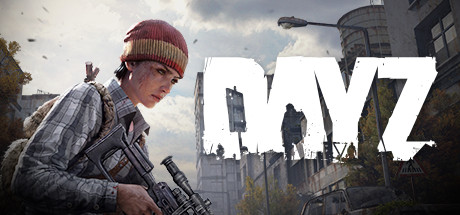
DayZ is the most-searched game on this site, and its cheapest recorded offer has never been a Steam promotion. (Official Steam screenshot)
What Steam Daily Deals actually were
The mechanism was simpler than most people assume. Valve's own wording: the Discounts & Events section "is made up of curated placements that are either scheduled directly by partners via Steamworks, or by us here on the Steam team."
That is a calendar. A fixed number of slots per day, booked in advance, filled either by a developer who applied through Steamworks or by someone at Valve who decided a game deserved the front page.
Valve's own documentation is unusually blunt about who got in. Daily Deals are awarded on "demonstrated customer interest or trending momentum in revenue over the past few months"; games typically need "tens of thousands of dollars in revenue per month" to qualify sustainably; and anything released in the last two to three months is ineligible, because "first discounts tend not to be eligible for Daily Deals due to lack of performance data."
Two further details are worth knowing, because almost nobody outside development does. The homepage placement lasts 24 hours, but the discount behind it runs for seven to fourteen days — so the badge disappearing never meant the price had gone back up. And curated promotions of all kinds were "limited to roughly once a year" per game, which is why a title you were watching would go quiet for months after its moment on the front page.
The flip side is that the calendar was a bottleneck. A finite number of games could be featured on any given day, no matter how many were actually discounted.
What Valve is changing, and when
Three concrete things, all stated in the post itself.
- Scheduling of curated placements — "Weekend Deals, Midweek Deals, and Daily Deals" — is already paused.
- Anything already booked will still run. Valve's words: "its placement will be honored and you don't need to take any action."
- Sometime in early 2027 Valve expects to "fully cease using a curated calendar for the Discounts & Events Section." There is no firm date, and the post admits as much.
Valve's justification is a test result rather than a philosophy. By swapping curated spots for personalised recommendations, it says, "we were able to show 10x more games to customers in a given day in that section," with "meaningful increases in store page visits, wishlists, and cart additions."
Take the 10x figure at face value and it still only measures exposure, not spending. Valve published no numbers alongside it, and "meaningful" is doing a lot of work in that sentence. It is a company telling developers why it is removing something they used to compete for.

The DayZ Frostline release trailer, from the official DayZ channel. Expansions like this one are exactly the sort of release that used to live or die on a curated slot.
Why the floor was never in the curated slot anyway
Here is the part the coverage elsewhere is missing. For anyone who buys on price rather than on impulse, the Daily Deal was never where the cheapest copy lived.
Three examples from our own record, all read on 1 October 2026:
- DayZ — tracked low $9.70, on 21 August 2026, at Gameseal. Bohemia's official price moves only during Steam's seasonal events; the reseller market grinds downward independently, all year.
- Slime Rancher — tracked low $1.39, on 26 September 2026, at Gameseal. Again a reseller, again outside any headline promotion.
- Warhammer: End Times - Vermintide — tracked low $0.68, on 22 September 2026, at Gameseal.
A pattern that holds across most of the catalogue we watch: the official channel does big, scheduled, well-signposted cuts a handful of times a year, and the reseller channel does small, continuous, unannounced ones. The curated homepage slot only ever advertised the first kind. Losing it does not move the floor by a cent.

Slime Rancher's cheapest logged offer this year came on an ordinary Saturday in September, with no promotion attached. (Official Steam screenshot)
What genuinely does change for buyers
Two things, and they pull in opposite directions.
The loss is shared reference. A curated calendar meant everyone saw the same deals at the same time, which made them discussable — a Daily Deal would be posted to a subreddit, aggregated by a dozen sites, and seen by people who were not shopping. Personalised recommendations are invisible to everyone but you. If a game you want is discounted and the algorithm has not decided you want it, nothing will tell you.
The gain is breadth, if Valve's test holds. A fixed slate of slots systematically favoured games already doing well, by Valve's own published criteria. Ten times the games on display should mean a better chance that something niche and genuinely discounted surfaces at all.
For the reader, the practical consequence is that passive discovery gets worse and active tracking gets better value. A wishlist and a price alert were always more reliable than the homepage. After early 2027 they stop being optional.

Slime Rancher's launch trailer, from developer Monomi Park's own channel.
What this means for smaller developers
Valve frames the change partly as a fairness fix, and the line is pointed: the goal is to let developers "focus on crafting the most compelling games and deals for customers, and not spend time trying to convince someone at Valve to feature their products."
That is an honest description of the old system. Getting a Daily Deal involved persuasion on top of a revenue bar, and the documentation above spells out that a studio with a good game and no track record was mostly locked out by design.
Whether an algorithm is fairer is unproven. Recommendation systems reward games that already convert well, which tends to mean games that already sell. The bottleneck may not disappear so much as become harder to see — and impossible to appeal.

Vermintide is eleven years old and still turning up at under a pound on the reseller market — the kind of long tail a curated calendar never had room for. (Official Steam screenshot)
What to do between now and early 2027
Nothing urgent, and that is the honest answer. The change is months away, booked placements will run, and the seasonal sales — which are a separate system — are untouched. The Autumn Sale running 1–8 October works exactly as it always has.
Three habits worth forming anyway:
- Wishlist aggressively. Wishlist notifications are tied to the discount, not to the placement, so they survive the change intact.
- Check the floor before you buy, not the badge. A percentage off tells you nothing without the historical low to compare it against.
- Know which channel you are buying from. The official and reseller markets behave differently enough that it is worth understanding both before you decide a price is good.

Terraria has never needed a homepage slot; it discounts on its own schedule and has done for over a decade. (Official Steam screenshot)
The bottom line
The end of Steam Daily Deals is a bigger story for developers than for buyers. If you shopped by scrolling the Steam homepage, your browsing is about to get stranger and more solitary, and you will no longer be able to assume that the deal you saw is the deal your friend saw. If you shopped by tracking prices, almost nothing changes — the cheapest copy of most games was never in that slot to begin with.
Do not treat the next four months as a closing-down sale. Nothing is being discounted because of this, and the seasonal calendar that actually governs official price cuts is unaffected. Carry on waiting for the sale you were already waiting for, and check the game page rather than the homepage when it arrives.