Games like Terraria when the boss ladder runs out
Playze Staff · Nov 22, 2026
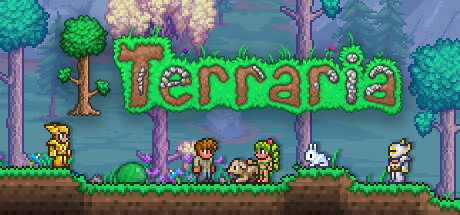
Every Terraria world ends the same way. You beat the Moon Lord, and the ladder you have been climbing for eighty hours simply stops. Re-Logic built that ladder out of bosses: each one drops the ore that lets you survive the next, and Hardmode tears up your whole world halfway through to do it again harder. That is the specific thing people miss afterwards, and it is rarer than it sounds. Plenty of games like Terraria hand you a 2D world and a pickaxe. Far fewer put a boss between you and the next tier of pickaxe.
| Game | Side-on or top-down? | Low | Date | Store |
|---|---|---|---|---|
| Necesse | Top-down | $7.42 | 2 Nov | Fanatical |
| Core Keeper | Top-down | $4.69 | 7 Nov | YUPLAY |
| Valheim | 3D, third person | $11.68 | 30 Oct | Kinguin |
| Starbound | Side-on | $1.58 | 8 Oct | Gameseal |
| Sandustry | Side-on | $7.22 | 28 Oct | Eneba |
| Forager | Top-down | $2.80 | 30 Oct | Kinguin |
Games like Terraria that keep the pickaxe pointed down
Fair Games' Necesse is the closest structural match anyone has built. It is procedurally generated, it is mined downwards, and progression is gated by bosses in exactly Terraria's manner — you do not get the better equipment until something large has died for it. What it adds is a settlement layer: you recruit specialists, assign them jobs and come back to a village that has been working while you were underground, which is the one thing Terraria's NPCs never quite do. It is top-down rather than side-on, and that changes the feel of exploration more than you would expect; caves become rooms rather than shafts, and you lose the vertigo of digging a hellevator. Dungeons are hand-built set pieces rather than one long structure, and the crafting tree is shorter, which means a run gets to its endgame in considerably less time than eighty hours. For anyone who wants the same loop without another full year of it, that is the point rather than a complaint. It also carries Workshop support and both co-op and competitive play, so a world you built alone does not have to stay that way.

Necesse puts a working village on top of the mining loop — the recruits keep producing while you are down a shaft. (Official Steam screenshot)
Pugstorm went the other way with Core Keeper, which begins you already underground and never lets you out. The whole map is rock until you remove it, so every corridor in your base is one you dug, and the lighting does real work: your torch radius is the edge of the world. Its boss sequence is the ladder again, each one guarding the material tier above, and up to eight people can share the cavern. Farming and fishing sit alongside the mining rather than beneath it. The limitation is scale — there is no surface, no sky, no weather, and no Hardmode-style second act that reshapes everything you built. What you get instead is the tightest version of the dig-light-fight loop on the list, and the one most people who bounced off Terraria's sprawl end up keeping. Progression is framed as a mystery rather than a tech tree — the Core at the centre of the cavern wants things brought to it, and working out what is half the game. Biomes change the rules as you tunnel outward, from sunken sea to clay caves, so the sameness you might fear from an all-rock map does not really arrive.

Core Keeper's map starts as solid rock, so the shape of your base is whatever you removed. (Official Steam screenshot)
Hardmode in three dimensions
Lose the 2D view and the structure underneath it can survive intact. Iron Gate proved that with Valheim: five bosses you summon deliberately, each unlocking the material that makes the next biome survivable, gear and base growing in lockstep. Build anywhere, dig anywhere, and the structural physics will punish a tower with no supports. Its Steam page now dates the full release to September 2026, so the long early-access period is over. Where it parts company with Terraria is tone — this is slow, cold and deliberate, with stamina and food to manage, and no equivalent of hopping into a world with a hundred items already unlocked.

Valheim's five summoned bosses gate its biomes the way Terraria's gate its ore tiers. (Official Steam screenshot)
Two dimensions, one long fall
Chucklefish published Terraria's console editions before making Starbound, and the family resemblance is not subtle: side-on worlds, the same satisfaction in a tunnel you dug yourself, the same trading-post-and-workbench rhythm. The change is that there is no single world. You get a ship, a galaxy of procedurally generated planets and a story pushing you between them, which trades Terraria's depth for breadth — you will see far more biomes and spend far less time mastering any one of them. Workshop mods are extensive and still active.

Starbound keeps the side-on dig and swaps one deep world for a galaxy of shallower ones. (Official Steam screenshot)
Strangest and newest on this list is Sandustry, from Lantto Games. Every pixel of its side-on world is simulated matter, so digging genuinely drains, collapses and floods, and the game you end up playing is about routing that mess into production chains. It is on Game Pass. Being in early access, its content ends sooner than the rest.

Sandustry simulates every pixel, so a badly placed tunnel floods instead of simply existing. (Official Steam screenshot)
Shorter than one Terraria world
HopFrog's Forager compresses the whole arc into an evening or two: you buy land, clear it, automate it, and watch the numbers climb. There is no boss ladder worth the name, which is why it sits last — but the resource-into-upgrade loop is the most immediately pleasurable version of it anyone has shipped.

Forager's islands are bought one at a time, which turns Terraria's open map into a sequence of small goals. (Official Steam screenshot)

Re-Logic's own Journey's End trailer, for the update that finished the ladder off.
One absence is worth naming. Minecraft turns up on practically every roundup of this kind, including both we checked while putting this together, and it belongs there on the crafting and exploration side. It is not sold on Steam, so we do not price it and it is not in the table above. If the appeal was the survival half rather than the boss half, our survival round-up goes wider, and games like Stardew Valley covers the farming end of the same shelf. Three of these six run co-op, which our co-op list puts in context.
After the Moon Lord, what to mine next
Play Necesse. It is the only game here that reproduces both halves of what you just finished — a world you dig through and a boss that refuses to let you past until your gear has caught up — and the settlement layer gives you something new to be responsible for rather than a smaller version of what you had. Core Keeper is the pick if the sprawl was the problem and you want the loop in a tighter box.
Starbound is the one to add without thinking about it. Across 38 days our price record for it never varied by more than about thirty cents, and its own habit is to sit deeply discounted rather than near full price — there is nothing to wait for. Everything live for the seed itself is on the Terraria page, and our piece on its pricing explains why fifteen years have barely moved it.
We wrote this from store pages, published reviews and our own price record, not from playing each game for this piece. Some store links on our game pages are affiliate links, so playze may earn a commission at no extra cost to you.