Steam refund policy: what qualifies, and what it is worth
Davit Darchiashvili · Sep 9, 2026

The cheapest listing for a game is not always the one that costs you least, and the reason is a single sentence buried in the Steam refund policy: "Valve cannot provide refunds for purchases made outside of Steam (for example, CD keys or Steam wallet cards purchased from third parties)."
Read that again with a shopping basket in mind. When you buy a key from a third-party store, you are not only buying the game more cheaply. You are also selling back your right to change your mind, and Valve has told you the price of that in advance: nothing, because you get no refund at all. Whether that trade is worth making depends entirely on how confident you are — which means the first thing to understand is what the refund window actually gives you.

Two hours into Baldur's Gate 3 you may still be in the prologue. The clock does not care. (Official Steam screenshot)
The Steam refund policy is two numbers, and they are an AND
Valve's own wording is that it will "issue a refund for any reason, if the request is made within the required return period". For a standard game or piece of software that period is "within two weeks of purchase and with less than two hours of playtime".
The word most people get wrong is the one between the two conditions. It is and, not or. Two hours of playtime on day one disqualifies you, even though thirteen days remain. Fifteen days with eleven minutes played disqualifies you too. There is no partial credit and no sliding scale, and the request goes through help.steampowered.com rather than to the developer.
Beyond those limits Valve says it will still consider requests, but "outside of the refund rules" is a favour, not a right, and it comes attached to a warning: "Refunds are designed to remove the risk from purchasing titles on Steam — not as a way to get free games. If it appears to us that you are abusing refunds, we may stop offering them to you." Treat the goodwill route as something you can use once, not a strategy.
The pre-order rule is the most useful line on the page
Here is the clause that almost nobody who pre-orders knows about. For advance purchases, Valve says "the two-hour playtime limit for refunds will apply (except for beta testing), but the 14-day period for refunds will not start until the release date."
That single sentence changes the arithmetic of pre-ordering. Money you put down six months early is not locked up for six months. The fourteen-day clock begins when the game launches, so a pre-order placed in March for a September release still gives you a full fortnight after release to look at the reviews, watch the performance reports land, boot it, and walk away.
It does not make pre-ordering a good idea — our look at what the price data actually shows is still the argument against, because you are paying the highest price the game will ever carry. But it does mean the risk of a pre-order is the price, not the commitment, and those are very different problems.

Elden Ring's launch trailer, from Bandai Namco Europe's own channel. Nothing it shows you happens inside the refund window.
Early Access starts your clock immediately
The same clause covers Early Access, and the consequence runs the other way. An Early Access game is released, as far as refunds are concerned, so both the fourteen days and the two hours begin the moment you buy it — the only carve-out is beta testing.
That matters because Early Access is where "I'll wait and see how it develops" is most tempting. Satisfactory spent five years in Early Access before its 1.0 release in September 2024. Anyone who bought it in year one and decided in year three that it was not for them had no refund route whatsoever, because their fourteen days expired in year one. Buying into Early Access is buying the current build, and the refund policy treats it exactly that way.

Five years of Early Access, and a refund window that closed fourteen days into the first of them. (Official Steam screenshot)
Two hours is not the same amount of game
The two-hour limit is a flat rule applied to a wildly uneven catalogue, and that is where it quietly fails you.
In Elden Ring, two hours might not get you past the first real boss, and certainly does not get you to the point where the map opens and the game reveals what it is. In Baldur's Gate 3, a careful player can spend most of the first hour in character creation and still be in the prologue when the clock runs out. In Factorio, two hours is roughly the tutorial — you have not yet hit the moment where a badly placed belt cascades into an afternoon of rework, which is the entire experience.

The Factorio problem in one image: at two hours you have built nothing that looks like this, so you have not met the game yet. (Official Steam screenshot)
Now invert it. In something like Human Resource Machine, two hours is a serious fraction of the whole thing. The refund window is generous for short games and nearly worthless for long ones — which is precisely backwards, since long games are the expensive, risky purchases.
The practical response is to spend the two hours deliberately. Do not leave a game idling in a menu while you make dinner; that is playtime. Play the opening properly, on the settings you will actually use, and make the call before the counter passes ninety minutes.
The rules people get caught by
Several categories have their own conditions, and they are stricter than the headline.
- DLC is refundable "within fourteen days of purchase, and if the underlying title has been played for less than two hours since the DLC was purchased, so long as the DLC has not been consumed, modified or transferred". Note whose playtime counts: the base game's.
- Bundles refund only as a whole, "if the combined usage time for all items in the bundle is less than two hours" and nothing has been transferred. One game you liked spoils the refund on the four you did not.
- Steam Wallet funds are refundable "within fourteen days of purchase if they were purchased on Steam and if you have not used any of those funds" — spend a penny and the whole top-up is locked in.
- Gifts follow the standard window; an unredeemed one can be refunded, and a redeemed one only if the recipient asks.
- Subscriptions that renew get 48 hours, from purchase or from each automatic renewal, if unused in that billing cycle.
- A VAC ban ends it. Valve's wording is blunt: if you are banned by the anti-cheat system on a game, "you lose the right to refund that game".
What the refund window is actually worth
Now put a value on it. The refund window is, in effect, a free two-hour trial of every game on Steam, and it is the only consumer protection in PC gaming that works the same way for a small indie release and a hundred-pound publisher title.
Buying a key from a third-party marketplace removes it entirely. That is not a hidden catch — it is Valve's stated position, and it is the honest cost to weigh against the saving. Our comparison of 105 popular games found keyshops genuinely cheaper most of the time, and our guide to buying keys without getting burned still stands. The refund question simply adds a rule to it: the more certain you are about a game, the more sense a key makes; the less certain, the more you should pay Valve's price for the right to hand it back.
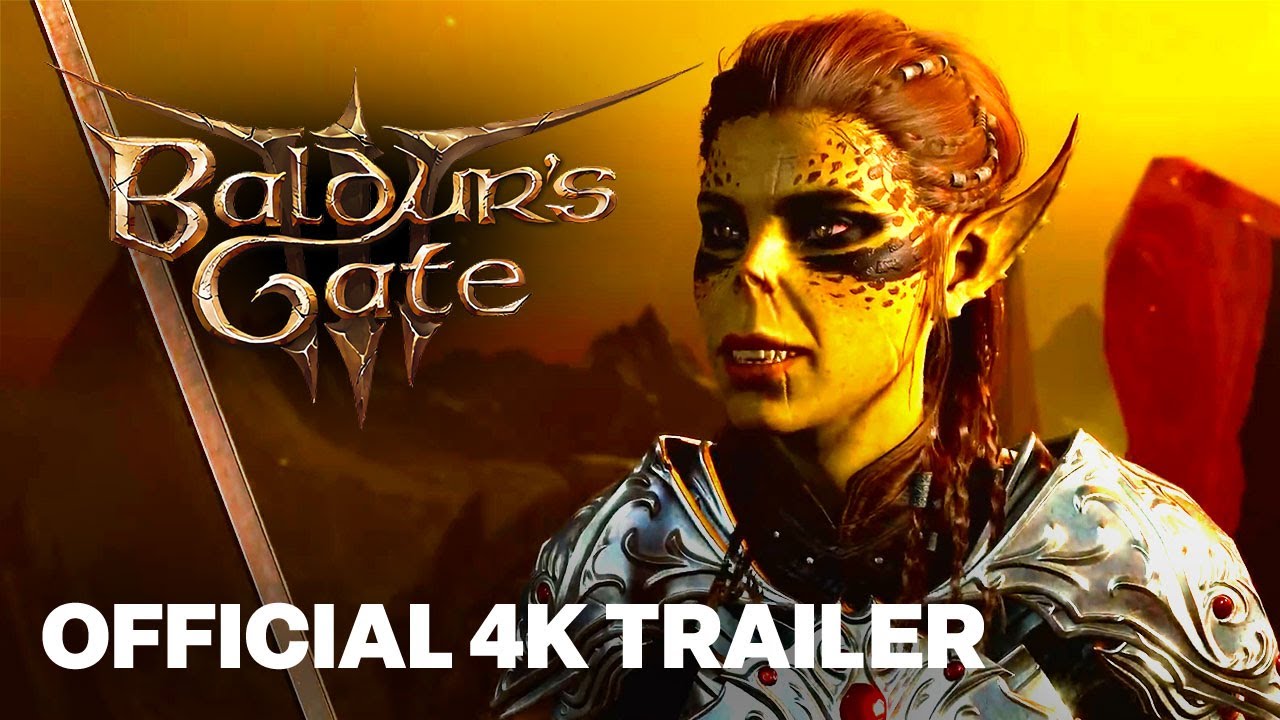
Baldur's Gate 3's launch trailer, mirrored here by the GameSpot channel — three minutes of a game whose opening two hours look nothing like it.
Bottom line
Learn three things from the Steam refund policy and you will use it correctly for the rest of your life on the platform. Both conditions must hold, so two hours ends it regardless of the date. Pre-orders do not start their fourteen days until release, which makes the commitment far less binding than the price. And a key bought elsewhere carries no refund at all.
Use it as a filter, not an escape hatch. Buy the uncertain game direct from Steam and give it a proper, undistracted two hours. Buy the certain one wherever it is cheapest — and check the game page and its all-time low before you do, because a refund you never need is worth nothing at all.