Region locked Steam keys: what to check before you buy
Davit Darchiashvili · Sep 7, 2026
You find a copy of a £50 game for £11, you pay, the code arrives, and Steam answers with a single flat sentence: this product is not available for purchase in this country. Welcome to the large and permanently annoyed club of people who have bought region locked Steam keys, and who may or may not get their money back depending on the seller. It is the single most common way a genuinely good keyshop deal turns into a bad afternoon.
The frustrating part is that it is entirely avoidable. Region locks are printed on the product page by every reputable seller, and everybody skims past them because they are printed in grey, near the bottom, in a box marked "activation details". Here is what those boxes actually mean, and the four checks that take about thirty seconds each.

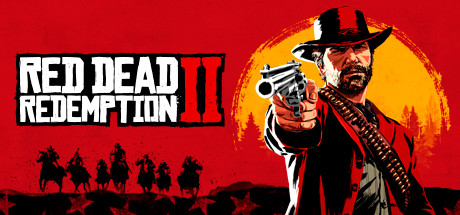
Rockstar's catalogue is one of the most heavily region-segmented on PC, which is exactly why it is also among the cheapest on keyshops. (Official Steam screenshot)
Why region locked Steam keys exist at all
Steam does not sell the same game at the same price everywhere, and it is not close. Valve's own developer documentation lists a set of territories that do not get a native currency at all and are instead priced in discounted US dollars: USD_CIS (Armenia, Azerbaijan, Belarus, Georgia, Kyrgyzstan, Moldova, Tajikistan, Turkmenistan, Uzbekistan), USD_LATAM, USD_MENA and USD_SASIA. Those regions exist because a game priced for Western Europe is unsellable in them.
The moment a publisher sets a price like that, an arbitrage appears: buy where it is cheap, sell where it is dear. Publishers respond by attaching a territory restriction to the keys they issue for the cheap regions. That restriction is the region lock. It is not a scam and it is not a bug — it is the mechanism that makes cheap regional pricing possible in the first place. Without it, publishers would simply stop offering the cheap prices.
Valve applies the same logic to gifts. Its partner documentation is explicit: "we limit gifting from lower-priced regions (e.g. South-East Asia) to higher-priced regions (e.g. North America)." A gift bought in Jakarta cannot be handed to a friend in Ohio.
The three restrictions people confuse with each other
They behave very differently, and the difference decides whether a cheap key is a bargain or a brick.
- Activation-region restriction. The key only redeems if your Steam account's store country is in the allowed list. Once redeemed, the game is yours permanently and travels with you anywhere. This is the common one.
- Run-time (launch) restriction. Rarer and much worse. The game checks your location every time you start it, not just at activation. Titles banned or censored in a specific country tend to work this way.
- Language or edition restriction. Not a region lock at all, though it is sold in the same grey box. A "RU/CIS" edition may be locked to Russian-language assets even where it activates fine. Check whether English is listed before you buy.
The practical upshot: an activation-region key from your own region is completely safe and permanent. An activation-region key from someone else's region is a coin flip. A run-time-locked key is worthless to you no matter what.
You can see all three patterns by scrolling the seller list on any heavily-traded game page. Red Dead Redemption 2 and Grand Theft Auto V are the classic region-segmented pair. Cyberpunk 2077 and The Witcher 3 are usually the opposite, because CD Projekt sell global keys as a matter of policy. Elden Ring, Hogwarts Legacy and Helldivers 2 sit in between, with global and regional editions listed side by side at prices far enough apart to tell you which is which.

CD Projekt sell Cyberpunk 2077 as a genuinely global key in most markets, which is why its keyshop prices are unusually trustworthy. (Official Steam screenshot)
The four checks before you pay
One: find the word "global". Every serious keyshop labels a key's territory somewhere on the listing — usually "Global", "EU", "RU/CIS", "LATAM", "ROW" (rest of world) or a country list. If the listing does not say, that is itself the answer: do not buy it. A seller who will not state the territory is a seller who does not want you to know.
Two: know your own store country. Not where you live — where Steam thinks you live. It is set by the billing address and payment method you last used, and you can see it in Steam under Account Details. People who moved country years ago are frequently still on their old store region and cannot work out why "EU" keys fail.
Three: check whether it is a key or an account. This one catches people out constantly, and you can see it in the URL. Scroll the offer list on any game page here and you will find listings whose links contain the words steam-account rather than steam-key. Those are not keys. You are buying login credentials to somebody else's Steam account with the game already on it, which means you do not own the game, you cannot merge it into your library, and you are in clear breach of the Steam Subscriber Agreement. They are cheap for a reason. Avoid them entirely.
Four: work out what the discount is actually buying you. If a global key is £14 and a RU/CIS key is £11, the £3 saving is not worth the risk unless you are in the CIS. If the gap is £14 versus £4, that is a different conversation — but it is also a strong hint that the cheap key is regionally restricted, whatever the listing says.

Elden Ring routinely appears on keyshops in both global and regional editions at wildly different prices — the gap is the tell. (Official Steam screenshot)
Do not try to route around it
The obvious idea — change your Steam country, or use a VPN, redeem, change back — is a bad one, and not primarily for moral reasons. Steam limits how often the store country can be changed and ties it to a verified payment method in the new country, so the manoeuvre usually fails outright. When it does work, it puts your entire library on an account that Valve can restrict, and there is no appeal worth having. You would be gambling a several-hundred-pound library to save a few quid on one game.
There is also no need. Global keys exist for the overwhelming majority of games, and the price gap between a global key and the official store is already large — our own comparison of 105 popular PC games found keyshops cheaper about 80% of the time, without anyone touching a VPN.

Warner's keys are usually global, but Hogwarts Legacy has shipped in enough regional editions that the listing is worth reading twice. (Official Steam screenshot)
Bundle keys have their own version of this
Bundle sites are a large share of the world's key supply, and their restrictions are shaped differently. Humble and Fanatical keys are generally global, because the bundles are sold globally at one price — but individual titles inside a bundle can carry publisher-imposed territory restrictions that apply to that game alone, listed on the bundle page rather than in your key inbox.
The two things that actually catch bundle buyers are more mundane. First, keys expire: leave them unredeemed long enough and some vanish. Second, a bundle key you resell or trade is usually a breach of the bundle site's terms, which is why bundle-sourced keys occasionally get revoked downstream. If you are weighing a bundle up, the arithmetic on Humble Choice covers the value side of the question properly.
If you have already bought a bad one
Do not redeem it. An unredeemed key is refundable at most sellers; a redeemed key that failed is a support ticket. If the listing said "Global" and the key was not, you have a straightforward misdescription case and reputable marketplaces will refund it — this is the single strongest argument for buying from sellers with buyer protection, which we cover in our guide to buying keys safely. If the listing correctly said "RU/CIS" and you did not read it, you will probably be told so, politely.
The bottom line
Region locked Steam keys are not a reason to avoid keyshops — they are a reason to read one line of the listing before paying. Buy keys marked Global, know which store country your Steam account is actually set to, never buy an "account" listing dressed up as a key, and treat a price that is far below every other seller as information rather than luck. Do that and the region lock stops being a risk and becomes what it actually is: somebody else's pricing problem.
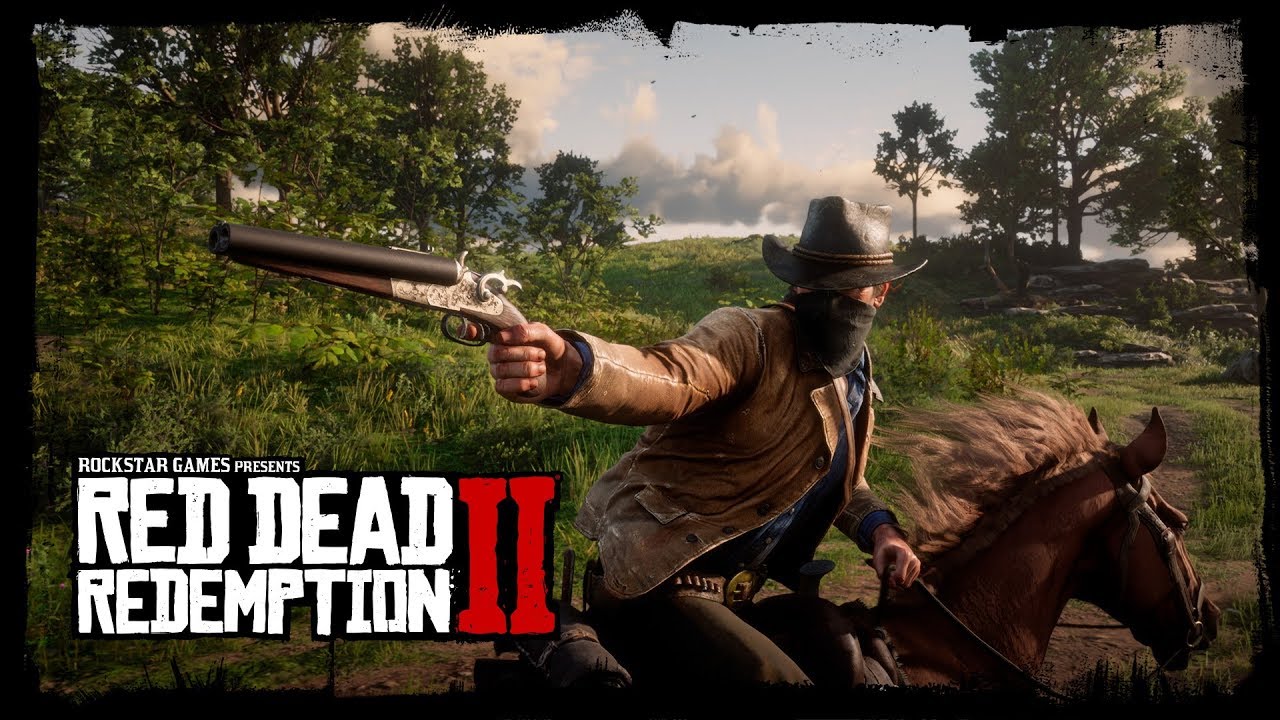
Rockstar Games' own PC launch trailer for Red Dead Redemption 2 — a game whose keyshop listings are worth reading carefully.
For the wider picture on why the same game costs different money in different places, our regional pricing explainer is the companion piece to this one, and the price-tracking guide covers when to buy once you have worked out what to buy.

CD Projekt Red's official launch trailer for Phantom Liberty, on the Cyberpunk 2077 channel.