Dragon Age Ultimate Edition: which one to buy, and what's in it
Davit Darchiashvili · Sep 19, 2026
Search for a Dragon Age Ultimate Edition and Steam hands you two different products with almost the same name, made eleven years apart, covering completely different games. One of them is the best-value package BioWare has ever sold. The other is a perfectly good bundle with a catch that nobody mentions until you have paid for it.
Then there are the two games in the series that have no Ultimate Edition at all, one of which quietly ships as a Game of the Year edition under a plain name — so people hunt for a better version that does not exist. Here is the whole shelf, what is in each box, and the order to buy them in.
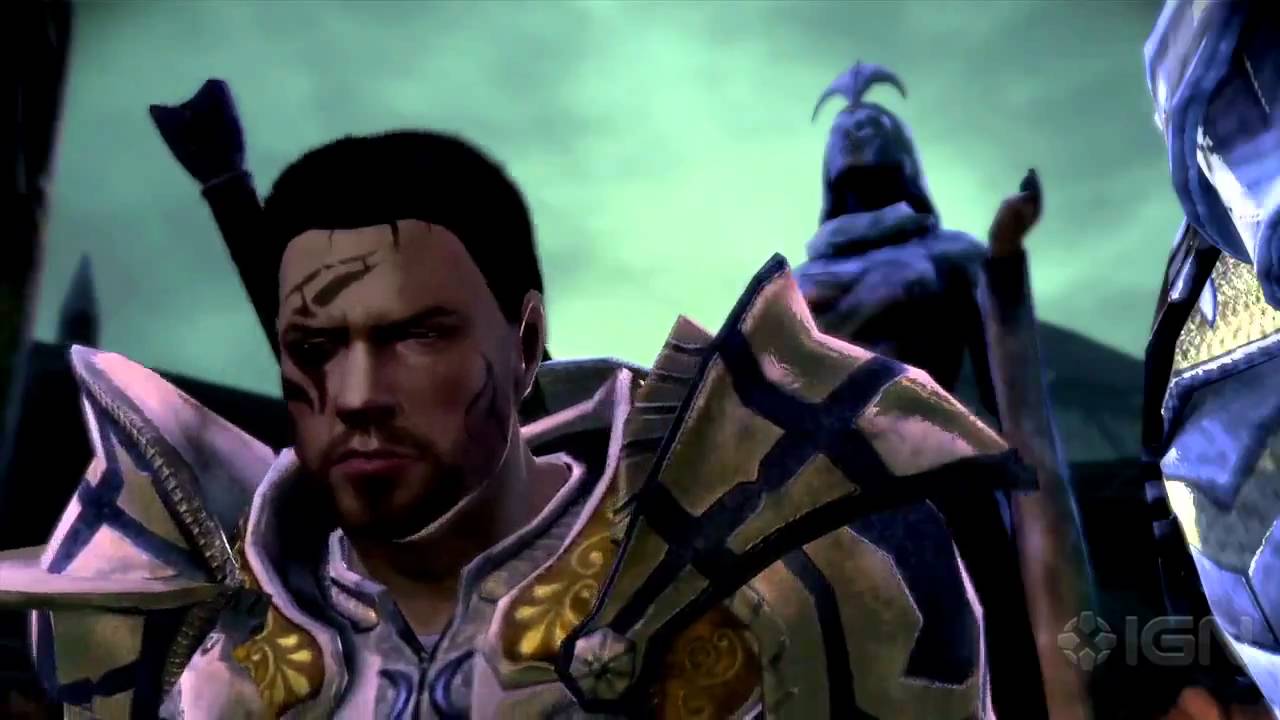
The 2010 Ultimate Edition trailer. This copy is hosted on IGN's channel, not BioWare's — the original publisher upload is long gone.
What Dragon Age Ultimate Edition actually includes
There are exactly two, and the difference is large.
Dragon Age: Origins — Ultimate Edition (Steam, October 2010) is the base game, the Awakening expansion, and all nine content packs: The Stone Prisoner, Warden's Keep, Return to Ostagar, Feastday Gifts, The Darkspawn Chronicles, Feastday Pranks, Leliana's Song, The Golems of Amgarrak and Witch Hunt. That is the complete 2009 game plus every scrap made for it, and several of those packs — Awakening especially — are substantial rather than cosmetic.
Dragon Age II: Ultimate Edition (Steam, June 2020) is the base game plus three expansions — The Exiled Prince, Legacy and Mark of the Assassin — along with the Black Emporium item shop, the Blood Dragon and Ser Isaac armour sets, and the Signature Edition weapons and armour. Legacy is the one worth having; the armour sets are trinkets.

Origins is the tactical one: pause, issue orders, watch a fight fall apart anyway. Awakening, included in the Ultimate Edition, adds a full campaign after it. (Official Steam screenshot)
The catch on the Dragon Age II bundle
The Dragon Age II listing carries a notice the Origins one does not: EA online activation, EA client software installed and running in the background, and a linked EA account. Inquisition's listing carries the same requirement.
This is not a dealbreaker — it is how most modern EA releases on Steam work — but it changes the calculation in two ways. If you are buying an eleven-year-old RPG specifically because you want something you can install once and run offline forever, Origins is the one that behaves that way and Dragon Age II is not. And if you are buying keys rather than shopping on Steam directly, an EA-activated title adds a second place the transaction can go wrong. Our guide to buying cheap keys without getting burned covers what to check; with these two, verify which store the key actually redeems on before you pay.
Inquisition has no Ultimate Edition, and does not need one
This is the single most common mistake with this series. There is no Dragon Age Ultimate Edition for the third game, and people waste time looking for one. The plain Dragon Age: Inquisition listing on Steam is the Game of the Year Edition — the store description says so in its opening line — which folds in the Jaws of Hakkon, The Descent and Trespasser story DLC along with the item packs.
Trespasser matters more than most post-launch content ever does: it is the actual ending of Inquisition and the direct setup for everything that follows. Buying a version of Inquisition without it would be a mistake, and the good news is that on Steam you cannot, because there is only the one listing.

Inquisition is the big one — a genuinely enormous game, and the Steam listing already includes the three story expansions. (Official Steam screenshot)
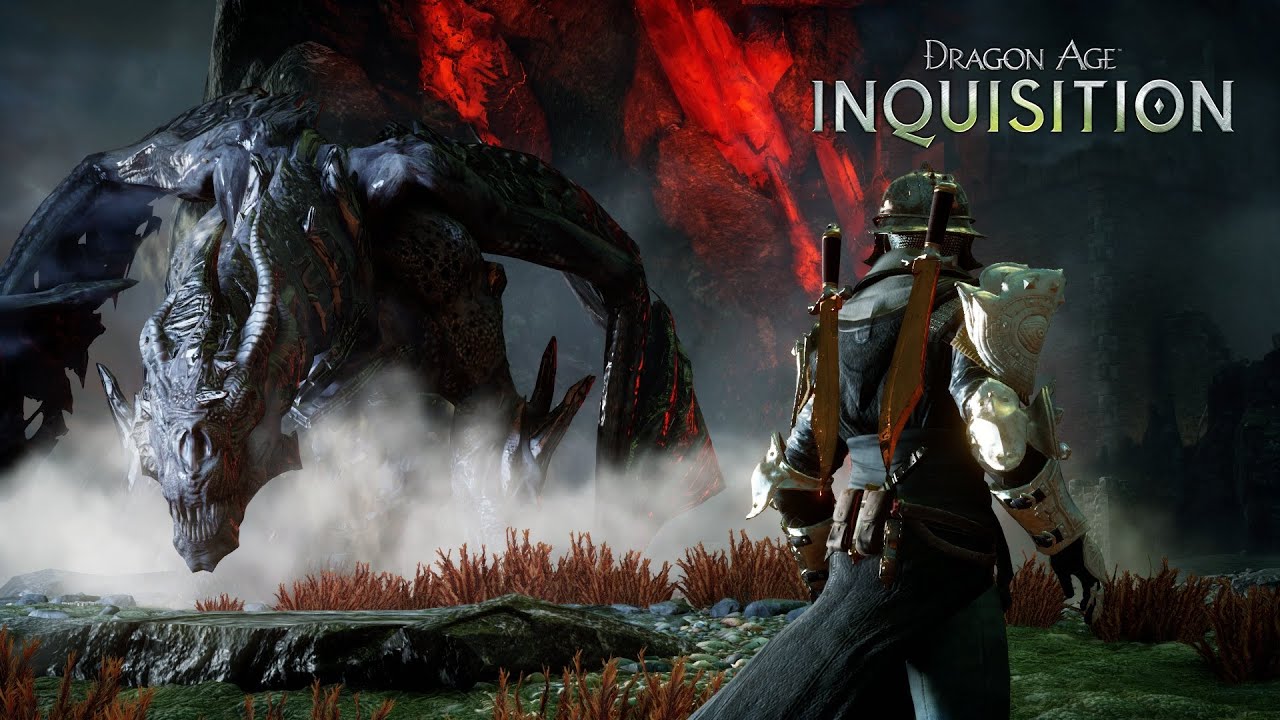
The Game of the Year Edition trailer, from the official Dragon Age channel — the version you are buying when you buy plain Inquisition.
As of 19 September 2026, Inquisition sits at the lowest point in the price record we hold for it, set two days ago and still holding. That is unusual timing and it will not last indefinitely — check the live figure on the game page rather than trusting a number in an article.
And The Veilguard, where "Deluxe" means nothing
Dragon Age: The Veilguard (2024) is the newest entry and the only one where an edition upsell is genuinely not worth considering. Its Deluxe edition contents are listed on the store page item by item, and every single line ends in the same two words: cosmetic only. Six weapon appearances, three armour set appearances for Rook, seven companion weapons, seven companion armour sets — appearances, all of them.
Buy the standard edition. There is no content behind the Deluxe wall. Veilguard also discounts far more aggressively than a two-year-old flagship normally would, and our record shows it swinging widely between summer and autumn, so it rewards waiting for a sale event in a way the older games do not.

The Veilguard's Deluxe edition adds armour and weapon appearances for Rook and all seven companions — and nothing that is not an appearance. (Official Steam screenshot)
Which one to buy first
If you have never touched the series, buy Dragon Age: Origins — Ultimate Edition. It is the cheapest of the four in practice, it contains the most content by a distance, it is the game the rest of the series keeps referring back to, and it is the only one that will tell you honestly whether you like BioWare's slow, conversation-heavy, pause-and-order style. If Origins bores you, nothing later in the series will fix that — and if what you actually want is a modern game built on the same bones, that is Baldur's Gate 3 rather than anything in this series.
If Origins lands, the sequence is straightforward: Dragon Age II next — shorter, much more divisive, but the character writing is the best in the series — then Inquisition, then Veilguard. If you bounce off Origins specifically because of the tactical combat rather than the writing, skip to Inquisition, which is the most conventional action-RPG of the four and the easiest entry point in 2026.

The conversations are the reason to be here. If these do not hold you in Origins, the later games will not either. (Official Steam screenshot)

Veilguard is the most action-led entry, and the one where waiting for a sale event actually changes what you pay. (Official Steam screenshot)
When they discount, and what to pay
All four are old enough to have settled into predictable patterns. The two Ultimate Editions and Inquisition are permanently cheap and go deeply discounted several times a year, usually alongside EA publisher sales and the big seasonal events — our Steam sales calendar lays out when those land. Veilguard is the only one where the timing of your purchase makes a real difference to what you pay.
Two things worth knowing before you buy. First, the gap between the official stores and the key resellers on EA back catalogue is narrower than on most publishers, because EA discounts its own old games so hard that there is little room left underneath. Second, a headline percentage on a game this old tells you almost nothing — what matters is whether the current figure is near the floor, which is the argument we made in what a historical low actually means.
The bottom line
Buy Origins — Ultimate Edition. It is the best package in the series, it needs no EA client, and at the prices this thing lives at, a hundred hours of RPG for less than a sandwich is not a decision that needs agonising over. Add Inquisition while it is sitting on its floor, since the plain Steam listing already is the Game of the Year edition and there is nothing better to wait for. Dragon Age II: Ultimate Edition is worth owning if the first two land, but go in knowing it needs an EA account. And on Veilguard, buy standard and wait for a seasonal event — the Deluxe edition sells you a wardrobe.