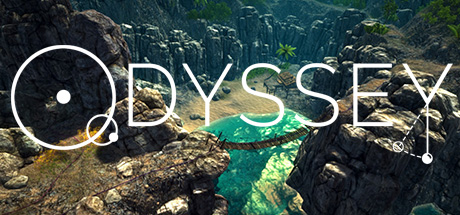

Odyssey - The Story of Science
The Young Socratics · April 19, 2017 · Adventure, Indie, Education, Puzzle, Physics
Buy Odyssey - The Story of Science from Steam at $0.99 — the cheapest of 5 stores we compare.
 Buy at Steam
 Where to buy Odyssey - The Story of Science — official stores
Cheapest Odyssey - The Story of Science keys — keyshops
Keyshops are third-party marketplaces — keys are resold and can be region-locked or a different edition. Check the listing's region & edition before buying.


Some store links are affiliate links — playze may earn a commission at no extra cost to you. It never changes the price you pay, and the cheapest option is always shown in the Best price box above.
Odyssey - The Story of Science price by region
Odyssey - The Story of Science costs $0.99 in the United States, €0.99 in Europe (EUR), £1.12 in the United Kingdom, $3.29 in Georgia (USD), CA$6.49 in Canada, zł6.91 in Poland, NZ$7.39 in New Zealand, A$7.50 in Australia and R$9.56 in Brazil right now.
| Region | Best price | Official store | Key shop | Stores |
|---|---|---|---|---|
 United Statesyour region United Statesyour region | $0.99 −80% | $0.99 | $1.48 | 5 |
 Europe (EUR) Europe (EUR) | €0.99 −80% | €0.99 | €1.25 | 5 |
 United Kingdom United Kingdom | £1.12 −74% | £4.29 | £1.12 | 5 |
 Georgia (USD) Georgia (USD) | $3.29 | $3.29 | — | 1 |
 Canada Canada | CA$6.49 −27% | CA$6.49 | — | 2 |
 Poland Poland | zł6.91 −70% | zł22.99 | zł6.91 | 3 |
 New Zealand New Zealand | NZ$7.39 | NZ$7.39 | — | 1 |
 Australia Australia | A$7.50 −27% | A$7.50 | — | 2 |
 Brazil Brazil | R$9.56 −44% | R$16.99 | R$9.56 | 2 |
Each row is a real price from that region's own stores, not a currency conversion, so the figures are not directly comparable. Switch regions in the header to shop the one you buy in.
Screenshots
About Odyssey - The Story of Science
"Imaginative and compelling" -- Noam Chomsky, Professor Emeritus of Linguistics and Philosophy, MIT
"An extraordinary step for science education" -- Bryan Brown, Associate Professor of Science Education, Stanford University.
"An innovative historical approach to teaching science" -- Jonathan Osborne, Professor of Science Education, Stanford University
"A wonderful 21st century meld of ideas" -- David Mumford, Fields Medalist, National Medal of Science Winner and Professor Emeritus at Brown and Harvard Universities
Details:
Drawn to one of the remote and uninhabited Wretched islands (in the Caribbean) by the distress call of 13- year old Kai, you find that all across the islands are barricades set up by her family, who are expecting a small group of unscrupulous sailors (pirates) to return to haunt them on the islands. At the same time, the family wants to allow rescuers to reach them. So while they expect the barricades to keep away the pirates at least for some time, they hope that a rescuer would be able to get through, with the help of clues planted by Kai inside fragments of text that the player would find scattered across the islands.
These fragments are pages from her journal that she wrote during her stay on the uninhabited islands, while her archaeologist Dad worked hard to excavate valuable Carib artifacts from the islands. She not only recorded the events that happened in her journal, but also her intellectual journey across 2000 years of astronomy and physics through Socratic dialogues with Dad, and her own observations and experiments guided by those conversations. She and her brother Sid also build a number of physical models as she debates, critiques and argues for her point of view with Dad. All of that is recorded in her journal.
But after a few unpleasant encounters with some nosy sailors, the last of which leaves the family stranded on the islands with their boat and radio smashed, and only a few days of time given to them to turn in all the valuable artifacts (including treasure) that the sailors believe Dad has found, they decide to plant barricades all over the islands to buy some time, since Dad's graduate students are expected to arrive within a month. To leave them clues about how to solve the puzzles, Kai tears up her journal and plants fragments all over the islands, so that the fragment in each place has clues relevant to the puzzle at that place.
The puzzles are arranged in a sequence that mirrors the chronological progression of ideas in astronomy and mechanics. So the player would be learning the history of astronomy and mechanics in a systematic sequence as he/she navigates through the islands.
The first game which is being released in Early Access covers Chapters 1-3 of the adventure.
Chapter 1 covers the origins of science, and the shift from the flat earth of the Pre-socratics to the spherical earth and physics of Aristotle.
Chapter 2 covers the shift from the geocentric universe of Ptolemy to the heliocentric universe of Copernicus and Galileo.
Chapter 3 covers the tussle between Galileo and the followers of Aristotle on free fall motion.
The third chapter ends midway through Galileo's physics and we plan to continue the story in a sequel game, which would cover the following chapters:
Chapter 4 would cover the mathematics of uniformly accelerated motion as developed by Galileo (1D kinematics).
Chapter 5 would cover Galileo's ideas about inertia and the mathematics of projectile motion (2D kinematics) .
Chapter 6 would complete the birth of a new physics with the construction of the three Laws of Motion and Universal Gravitation by Newton.
Meant for ages 11+.
Odyssey - The Story of Science — game info
- Platforms
- Windows, macOS
- Steam Deck
- Playable
- Player modes
- Single-player
- PC Game Pass
- Not included
What Steam players say
Recent verbatim reviews from Steam — separate from playze.io community reviews below.
I may not be a fan of learning math, astronomy and physics but I sure appreciate a game which teaches those subjects. That being said, I am into puzzles and this game is mix bag in that regard. A big chunk of puzzles is around astronomy, after that you will meet up some physics/math puzzles where you gotta do some calculations, but do not worry, even for me, and I suck at math, they were easy enough. Towards the ending the game has some pendulum related puzzles, and I gotta say, these were the easiest. And regarding the ending, it was a let down, I fully expected to pass into the next area, but nope, I was hit with the credits and then back to main menu. BTW you can also read the journal to get clues/tips or sometimes straight out answers on how to solve the puzzles, but that is optional, so if you wana increase the difficulty of the puzzles just do not read the journal. Also do not worry about collecting the journal pages, they are mandatory and you will not miss anything. Also, if you want to read it at the fullest, do so before [spoiler] using the cart in the caves, because after that you will not get the chance to read it again.[/spoiler] As for the story, well, I can’t say …
The game had an interesting concept and I learned a lot from it. The journal added depth to the story and presented the theory in an engaging way. However, there were many instances where it failed to clearly explain the information needed to solve the puzzles, which made parts of the game frustrating. The world was beautiful and there weren't any major bugs.
Wonderful educational game
I'm not against educational games. I have great memories of playing titles like The Oregon Trail, Spelling Blizzard, and others. What stands out about those games is that they were, in fact, GAMES! They had fun puzzles, animations, sounds, and could be enjoyed strictly as a game, allowing you to learn almost by accident. Odyssey The Invention/Story of Science fails to be an enjoyable game. Instead, Odyssey hands you, piece by piece, a 200-300 page textbook which relates the story of a young girl talking to her father about scientific concepts and how ancient scientists reasoned on topics like the shape of the earth, physics, and more. If you were to stick with reading this book, it is quite dry, long-winded, and unengaging. I gave up on it rather quickly. Fortunately, the clues to solve (almost) all of the puzzles in the game are highlighted in bright yellow within the book. If you need those hints, they are easy to find. The rest of the game has you following a series of electrical cables around the island to different shacks and towers which contain contraptions which demonstrate different scientific concepts. If you adjust the devices to properly demonstrate the scientific con…
It's a good game. 10/10
Game does not load.
Community reviews
0 reviews
Sign in to write a review.
No reviews yet. Be the first to review this game.
More like Odyssey - The Story of Science


News
 Xbox
XboxMinecraft Dungeons 2 Deluxe Edition: skip it, play on Game Pass
The Minecraft Dungeons 2 Deluxe Edition asks you to pre-order two unannounced DLC packs for a game Game Pass already gives you. What it contains, and why the upgrade can wait.
Sep 30, 2026 PC
PCIs DayZ worth it? A straight answer before you buy
Is DayZ worth it? Twelve years on it is still the genre's least forgiving game. What you are buying, who it suits, and what our 97-day price record says about the timing.
Sep 30, 2026 PC
PCTransport Fever 3 price: which edition to buy on launch day
Transport Fever 3 is out today. The Transport Fever 3 price splits three ways, the loyalty discount has a fortnight-long fuse, and our record shows what the older game really costs.
Sep 29, 2026 PC
PCNo Man's Sky price: how low it gets and when to buy
The No Man's Sky price has come a long way down since 2016, and the game is on PC Game Pass too. Our tracked 12-month low, the regional key gap, and what to actually pay.
Sep 29, 2026 Deals
DealsSekiro cheap: what our price record shows, and what to avoid
Search Sekiro cheap and the results are keyshop listings, not a store discount. Our three-month price record explains the gap, and why so few live offers changes the advice.
Sep 28, 2026 Freebies
System Shock 2 Remaster free on Epic from 1 October
System Shock 2 Remaster free on Epic from 1 to 8 October, alongside BURIED STARS. Our price record shows why its floor has not moved in three months, and why waiting beats buying this week.
Sep 28, 2026 PC
PCDead Island 2 cheap: which edition, and what the price does
Dead Island 2 cheap used to mean under a dollar. Our price record shows the floor has roughly doubled since September - here is which edition to buy, and the one that is a trap.
Sep 27, 2026 Deals
DealsSteam Autumn Sale 2026: the games that cannot be discounted
The Steam Autumn Sale 2026 runs 1-8 October, but Valve's own rules bar every September release from it. Which games are locked out, and what our record says about the two biggest.
Sep 27, 2026 PC
PCTekken 8 ღირს თუ არა: 91 ქულა და შერეული შეფასება
Tekken 8 ღირს თუ არა, როცა კრიტიკოსებს 91 ქულა აქვთ დაწერილი, მოთამაშეებს კი „შერეული"? ფასი, ონლაინის მდგომარეობა და უკეთესი ალტერნატივა.
Sep 24, 2026 Deals
DealsStellaris იაფად: ოცდახუთი დამატება და ერთი გამოსავალი
Stellaris იაფად ყიდვა საბაზისო თამაშის შემთხვევაში მარტივია. ძვირი დამატებებია — და მათთვის არსებობს ვარიანტი, რომელსაც ბევრი ვერ ამჩნევს.
Sep 24, 2026 PC
PCARK ფასი: Evolved თუ Ascended — რომელი ვიყიდოთ
ARK ფასი ორი სხვადასხვა თამაშის ფასია. რომელი ჯობია ქართული სიიდან, სად არიან მოთამაშეები და რატომ არ ღირს ახალ ვერსიაზე გადახტომა.
Sep 24, 2026 Deals
DealsCivilization 6 იაფად: რომელი დამატება ღირს მართლა
Civilization 6 იაფად ყიდვა მარტივია — საბაზისო თამაში იაფია და იაფად რჩება. რთული ის არის, რომ ცხრამეტი დამატებიდან სწორი აირჩიოთ.
Sep 24, 2026 Freebies
CS2 უფასოდ: რა ღირს სინამდვილეში Prime
CS2 უფასოდ ითამაშება საქართველოდანაც და ეს დემო არაა. ფული მხოლოდ Prime-ს სჭირდება — აი, რას იძლევა ის და ვის ღირს.
Sep 24, 2026 PC
PCCuphead ღირს თუ არა: სირთულე, DLC და ორზე თამაში
Cuphead ღირს თუ არა: ექვსივე ქართულ მაღაზიაში ერთი ფასია, მეგობარს კი ასლი საერთოდ არ სჭირდება. სირთულე, ერთადერთი დამატება და როდის ვიყიდოთ.
Sep 23, 2026 Deals
DealsRimWorld იაფად: ბაზა, ხუთი დამატება და სწორი რიგი
RimWorld იაფად ყიდვა დამატებების რიგზეა დამოკიდებული, არა ფასდაკლების ლოდინზე. რომელი ხუთიდან ღირს ჯერ და რომელ მაღაზიას აქვს ფასდაკლება.
Sep 23, 2026 PC
PCPhasmophobia ფასი: ოთხი ასლი და ერთი მაღაზია
Phasmophobia ფასი ქართულ სიაში მხოლოდ ერთ მაღაზიაში ჩანს, თამაში კი ოთხზეა გათვლილი. რატომ ღირს ფასდაკლების დალოდება და რა გჭირდებათ დასაწყებად.
Sep 23, 2026Top games right now
All rankings →- 1Counter-Strike 2Free
- 2Dota 2Free
- 3PUBG: BATTLEGROUNDSFree
- 4Grand Theft Auto V Legacy—
- 5Terraria$2.20
- 6Rust$25.98
- 7Team Fortress 2Free
- 8Black Myth: Wukong$35.70
- 9HELLDIVERS™ 2$30.92
- 10ELDEN RING$52.89
- 11Apex Legends™Free
- 12Left 4 Dead 2$9.99
- 13Stardew Valley$14.74
- 14Wallpaper Engine$3.99
- 15Euro Truck Simulator 2$4.99
- 16Dead by Daylight$10.40
- 17Red Dead Redemption 2$12.60
- 18Baldur's Gate 3$41.99
- 19Phasmophobia$18.24
- 20War ThunderFree
- 21Call of Duty®—
- 22ARK: Survival Evolved$14.20
- 23Among Us$3.03
- 24The Forest$19.99