Why are Nintendo Switch games so expensive, and what to do about it
Davit Darchiashvili · Sep 2, 2026
Open the eShop, find a Nintendo first-party game from the Switch's launch year, and look at the price. Nine years on it is very likely sitting within a rounding error of what it cost on day one. Do the same exercise on Steam with anything released the same week and you will usually find a game that has been through thirty or forty sales and settled at a fraction of its list price.
That gap is the whole reason people ask why are Nintendo Switch games so expensive. It is not a regional quirk, a shortage, or a rumour. It is a deliberate commercial position that Nintendo has stated in public, propped up by three structural facts about how its games are sold. Understand the four of them together and you can work out precisely which Switch games are worth paying Nintendo's asking price for, and which ones you are quietly overpaying for by buying them on the wrong machine.
Why are Nintendo Switch games so expensive? Because Nintendo prices on value, not on pressure
Speaking to The Washington Post in April 2025, Nintendo of America's president Doug Bowser described the company's approach as "variable pricing". Asked why one Switch 2 launch title cost more than another, he said Nintendo weighs "the development that's gone into the game, the breadth and depth of the gameplay… the durability over time and the repeatability of gameplay experiences", adding that "there's many more that go into consideration of what is the right price point for the game" and that the company "hasn't set a benchmark".
Treat that as a pricing doctrine rather than a press line and it explains a great deal. "Durability over time" and "repeatability" are not descriptions of a game. They are descriptions of a catalogue a publisher expects to keep selling for a decade. A company that genuinely believes its game will still be moving units in year eight has no commercial reason to cut the price in year two — and Nintendo, almost uniquely, is right about that belief.

The April 2025 Switch 2 Direct, where the pricing that started this whole argument was first shown. (Nintendo of America's official channel)
Discounting is a lever Nintendo has chosen not to pull
For every other major publisher, the price cut is a marketing instrument first and a concession second. A discount buys front-page placement, triggers wishlist emails, and drags a five-year-old game back into the charts for a fortnight. That is why the PC calendar is as regular as it is; we mapped the rhythm of it in our guide to when PC games actually go on sale.
Nintendo largely opts out. Its first-party games do go on sale, but shallowly, briefly, and on Nintendo's schedule rather than the market's. The company does not need a discount to be discovered: its games are the reason the hardware sells. Remove the marketing incentive to cut prices and the only reason left is competitive pressure — which brings us to the third structural fact.

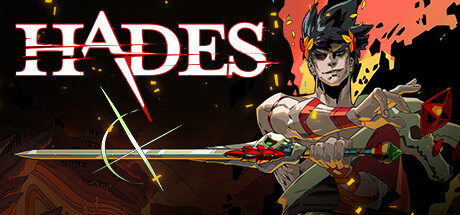
Hades is on Switch and on PC. Only one of those two versions has spent five years in a competitive discount market. (Official Steam screenshot)
There is no key market underneath the eShop
A PC game reaches you down a dozen roads: Steam, the publisher's own store, Epic, GOG, Humble, Fanatical, and behind all of those a large grey-ish market of key resellers, each with an incentive to undercut the one next to it. That competition is what drags PC prices down between sales. It also has real pitfalls, which is why we wrote up how to buy cheap keys without getting burned.
Nintendo has one digital storefront for Nintendo games and no authorised third-party key sellers for its own titles. Nobody is undercutting the eShop, because there is no other digital door into it. The single most powerful downward force on PC pricing simply does not exist on the platform. Anyone comparing an eShop price to a Steam price and concluding that Nintendo is greedy is really observing the difference between a monopoly channel and a competitive one.
The cartridge is a real cost, and game-key cards are the industry admitting it
The fourth factor is physical, and Switch 2 made it visible. Nintendo's own support pages now document a second kind of boxed product: "Game-key cards are different from regular game cards, because they don't contain the full game data," it writes. "The game itself isn't included on the game-key card, so you'll have to download it before you can play." The card still has to live in the console afterwards — "like regular physical software, the game-key card must be inserted into the system in order to play the game."
That is a boxed product whose only contents are permission. Nobody designed it for the buyer's benefit. As Nintendo Life put it in its December 2025 rundown of Switch 2 physical releases, "production costs of these large-capacity cartridges eat into companies' profits, so many publishers are opting to release Game-Key Cards instead". Cartridge manufacturing is a line item that disc-based platforms have not had to think about for twenty years, and it is baked into the shelf price of every full physical Switch release.

Hollow Knight is one of the games most often bought twice — once cheaply on PC, once again at handheld prices. (Official Steam screenshot)
Where the Switch discounts actually live
Three places, in descending order of usefulness. Physical retail first: retailers set their own margins on boxed copies, and a supermarket clearing shelf space has no interest in protecting Nintendo's positioning. Second-hand next, the one genuine advantage a cartridge still has over a download — a card you have finished with is an asset, a licence is not. The eShop's seasonal sales come third, and are worth watching mainly for third-party titles.
What does not work is region-hopping. Different regional eShop prices are real, but they are tied to account region and payment method for a reason, and the mechanics of why the same game costs different amounts in different countries are worth understanding properly — we covered them in why the same game costs different prices in the US, EU and UK.
The Switch games you are almost certainly overpaying for
Here is the practical part. Nintendo's own games have no substitute: Mario, Zelda and Pokémon exist on Nintendo hardware or not at all, and no amount of patience produces a cheaper copy. But open a typical Switch library and count how much of it Nintendo actually published. For most people it is under half. The rest is multiplatform — the same code, the same content, sold at eShop pricing on one machine and at PC pricing on the other.
That list is long, and it is dominated by exactly the games people buy a Switch to play in bed. Hades, Hollow Knight, Stardew Valley, Dead Cells, Cuphead, Slay the Spire and Divinity: Original Sin 2 are all on both platforms, and every one of them has spent years in the PC discount market that the eShop does not have. Check the live prices on those game pages before you buy any of them on a Switch; the difference is usually not marginal.
Hades' Switch launch trailer. Identical game, two completely different pricing environments. (Nintendo of America's official channel)

Stardew Valley is the clearest case of all: a decade-old game whose PC price has moved a long way and whose eShop price has not. (Official Steam screenshot)
The portability defence has weakened a lot
The honest counter-argument used to be simple: yes, it is cheaper on PC, but I want it on a train. That defence was airtight in 2018 and is much thinner now. A Steam Deck or one of its Windows handheld competitors plays the cheap PC copy on the same sofa, off the same library, with the same save. It is a larger up-front outlay and a fussier machine, but it removes the premium entirely rather than paying it once per game. Our list of the best games to play on Steam Deck is largely the same catalogue people are buying at full price on the eShop.

Cuphead runs on both machines and has been through the full PC discount cycle on one of them. Buying it twice is a common and avoidable mistake. (Official Steam screenshot)
What is still worth paying Nintendo's price for
First-party Nintendo games, without much hesitation. The price will not meaningfully move, waiting eighteen months buys you almost nothing, and the alternative is not owning them. Treat a Mario or a Zelda the way you would treat a concert ticket: the number is the number. What waiting is worth doing for is anything third-party, where patience is straightforwardly profitable — the logic is the same one we set out in what a historical low price actually means.

Dead Cells has been in more PC bundles and sales than almost any game of its generation. None of that history reaches the eShop. (Official Steam screenshot)
The bottom line
Nintendo Switch games are expensive because Nintendo has decided its catalogue does not depreciate, and because nothing in the platform's structure — no rival storefront, no key resellers, no cheap discs — can force the issue. That is not going to change, and arguing with it is a waste of energy.
So split your buying in two. Pay Nintendo's price for Nintendo's games and stop feeling bad about it. For everything else on the Switch, check what the same game costs on PC first, every single time, because the eShop price is the one price in games that was never negotiated down. If you want a system for the second half of that, our price-tracking guide is the place to start.